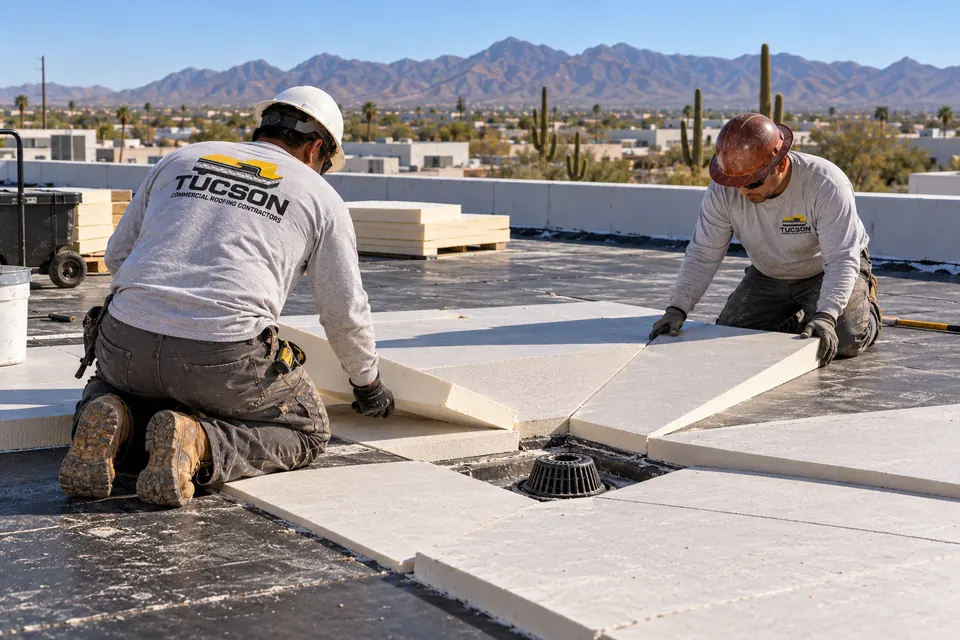
TPO Roofing
Thick white TPO over a high-density cover board, with heat-welded seams, for flat retail and office roofs replaced after hail damage.
Best forFlat roofs with widespread hail bruising
Look elsewhere ifOnly a few seams need repair

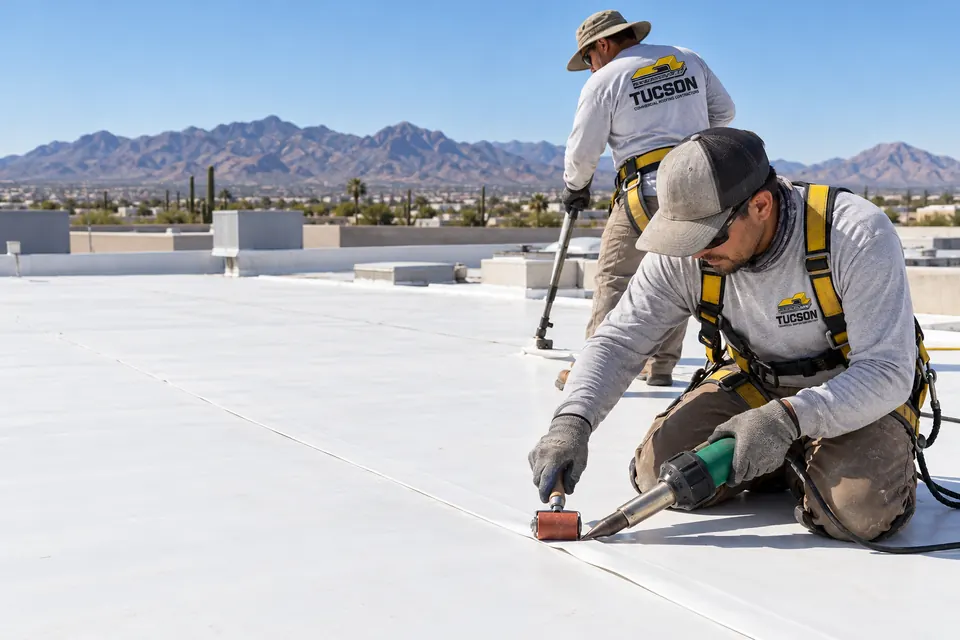
As a Valencia West commercial roofing contractor, we inspect, repair, and replace commercial roofs after hail and monsoon storms, documenting bruises, punctures, and lifted edges for the owner and the insurance carrier.
Hail and monsoon wind leave damage that is hard to see from the parking lot. A close look on the roof sorts fresh storm damage from old wear.
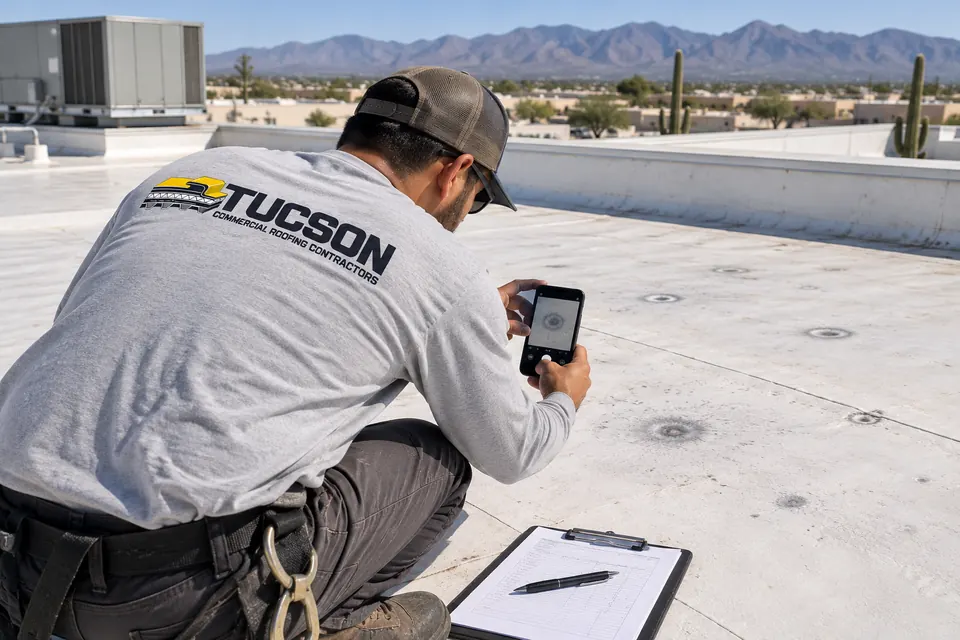
Hail can bruise the insulation under a membrane, crack the coating on aging metal panels, and puncture a brittle sheet. Some of that damage leaks right away, and some opens up a season later when heat stresses the bruise.
We photograph each hit with a scale reference, note the storm date, and mark the spots on a roof plan. Owners use that record when they call their insurance carrier, and we use it to price the repair.
Use this list after a storm to decide what needs a call right away.
Large hailstones can punch clean holes through aged single-ply sheets. Each puncture lets water straight into the insulation, so the roof needs a temporary patch before the next storm arrives.
Hail crushes the cover board and insulation below the membrane without breaking the surface. Soft, dished spots under foot mark the bruises, and the membrane over them wears through faster.
Microburst winds catch a loose edge and peel membrane or metal back from the perimeter. Once the edge lifts, the next gust tears more roofing free and rain reaches the deck.
Dents in metal panels and trim from hail often stay cosmetic, yet cracked factory coating at a dent rusts over time. Photograph them now while the storm date is fresh.
Rooftop unit coils and housings take hail too. Flattened fins and cracked curb flashing around the unit leak into the ceiling and belong in the same storm record.
Storms wash leaves, gravel, and broken pieces into drains and scuppers. A blocked outlet after one storm turns the next downpour into ponding water across the roof.
When storm damage spreads across a roof, replacement fixes problems that patching leaves behind.
Aged, brittle membrane shatters or punctures under hail that a newer sheet would shrug off, and every hit becomes a leak point.
Thicker membrane over a high-density cover board spreads hail impact across a wider area, so fewer hits reach the insulation below.
Bruised and punctured areas let water soak the insulation, and wet boards stay wet under the membrane for months in summer heat.
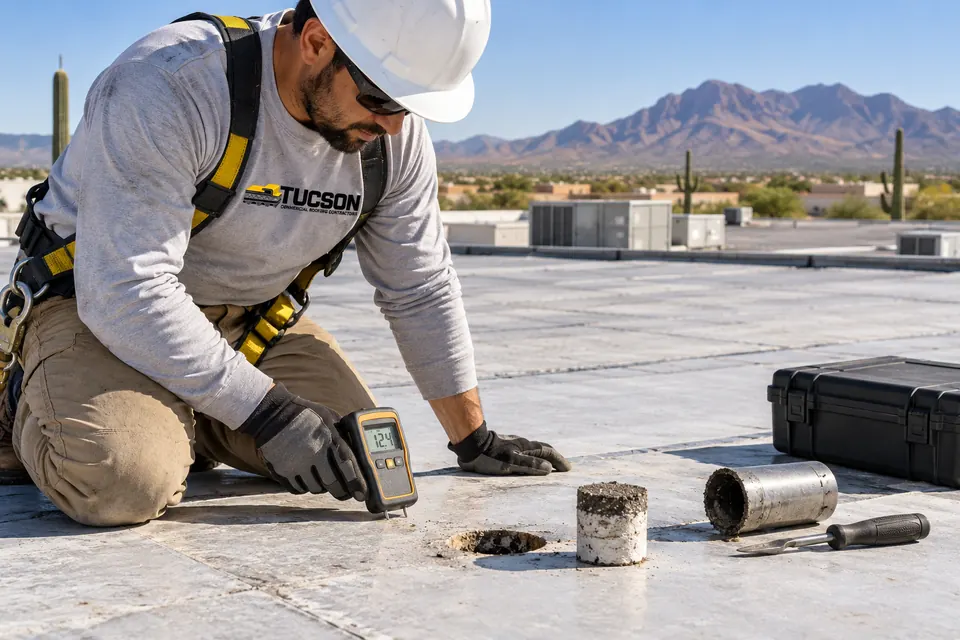
Tear-off removes every wet board, and new tapered insulation and membrane go down over a dry deck checked by core cuts.
Original edge metal fastened on a wide pattern lifts in microbursts, and each storm pulls a little more of the perimeter loose.
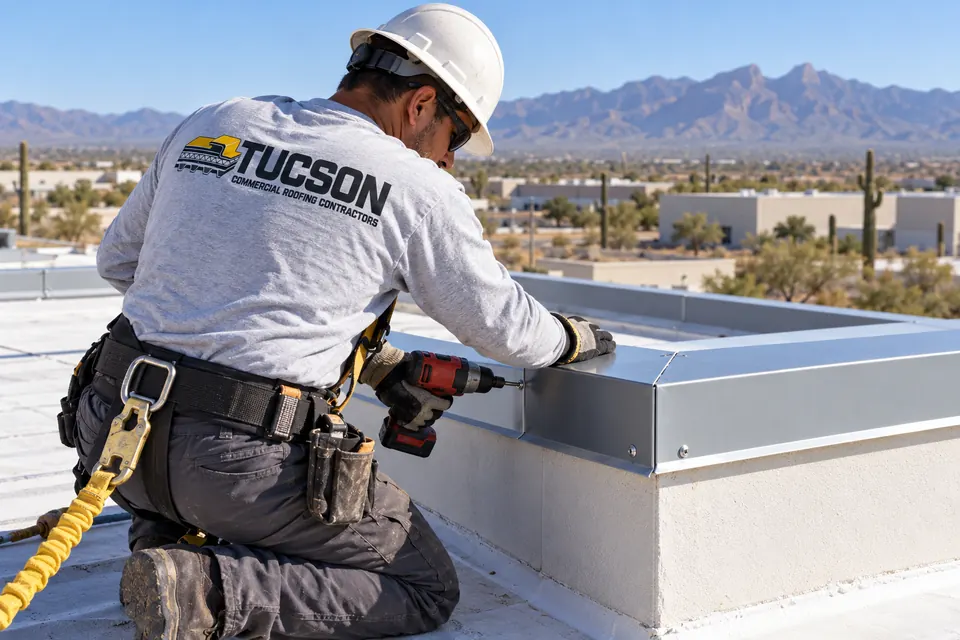
New edge metal fastened on a tight pattern at corners and perimeters holds the membrane down when monsoon gusts hit the building.
Patching storm hits one at a time leaves a roof full of repairs of different ages, which makes the next claim harder to document.
A full replacement starts a clear record, with installation photos and a dated roof plan to compare against after future storms.
These three services cover most storm repairs and replacements we handle in Valencia West.
Thick white TPO over a high-density cover board, with heat-welded seams, for flat retail and office roofs replaced after hail damage.
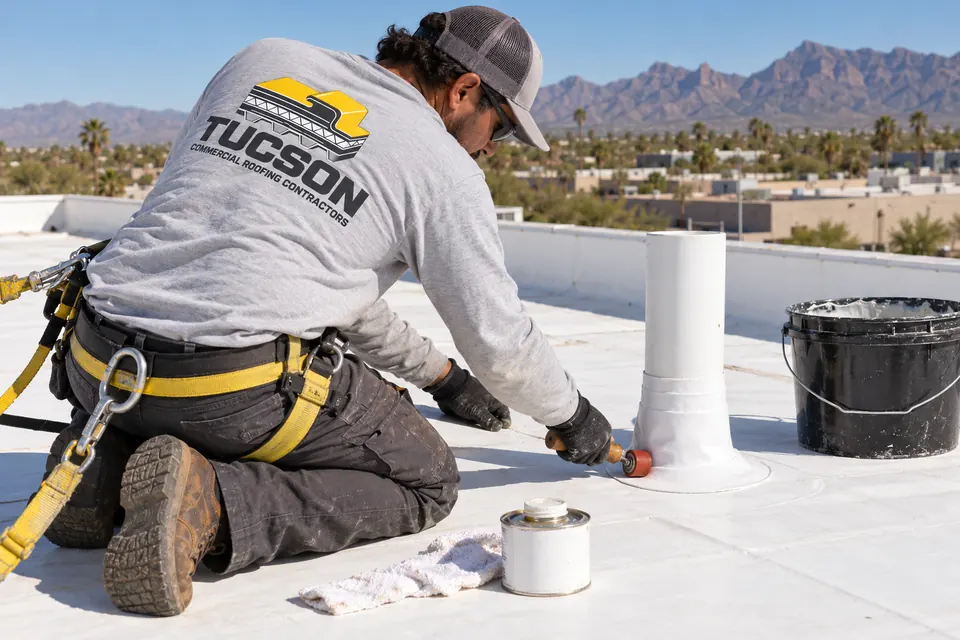
EPDM patches and full replacements, with new pipe boots and flashing where hail split the old rubber around vents and pipes.
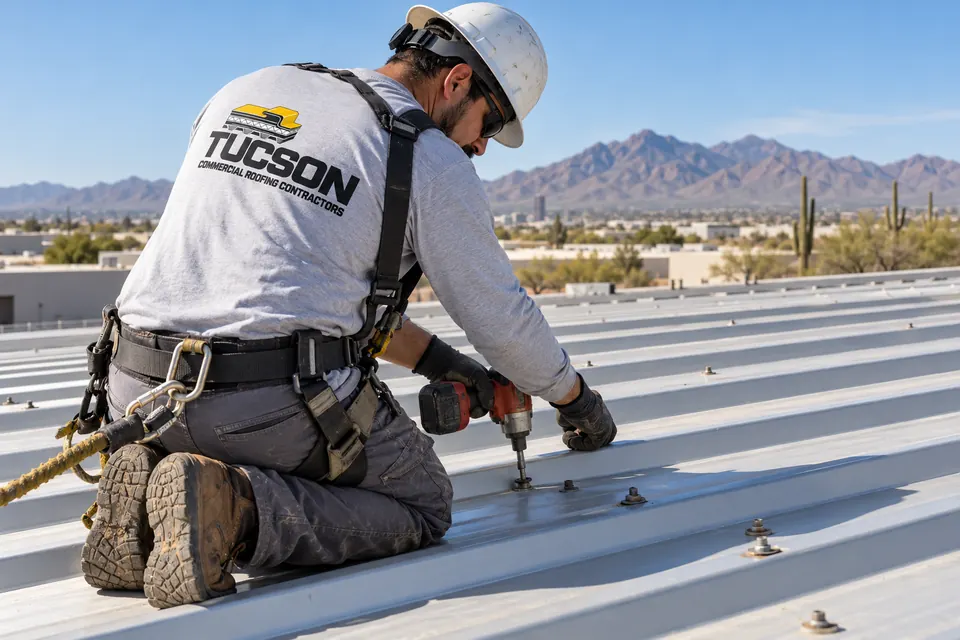
Metal panel, trim, and fastener repair after storms, or replacement panels where hail cracked the coating across whole panel runs.
Call and tell us the storm date, where water came in, and whether you have photos from the ground or the roof.
After a storm, the order of work protects the building first and settles repair or replacement second.
Hail hits, lifted edges, damaged units, and blocked drains are photographed with the storm date and marked on a roof plan you keep for your records.
Punctures and torn edges get patched or covered right away, so the next monsoon cell finds the roof closed and the interior dry while the claim moves forward.
Photos, the roof plan, and core cut results go to the owner to send to the insurance carrier. Contact the carrier promptly once damage is found.
Scattered hits on a newer membrane point to repair. Bruising across most of the field, or wet insulation in the core cuts, points to a full replacement.
Valencia West sits in unincorporated Pima County, so roof replacements are permitted through Pima County Development Services, with inspections during the job and at final sign-off.
New insulation, cover board, membrane, and edge metal go down section by section, and a final walk checks every seam, curb, drain, and scupper before handover.
Valencia West lies southwest of Tucson. We also serve these nearby areas.
Church roofs scheduled around services and events.
Parapet storefront roofs with tight street access.
Metal farm and processing buildings south of Tucson.
Multi-building properties inspected and phased together.
Start by photographing what you can see safely from the ground and writing down the storm date. Then get a roof inspection, have temporary repairs made to stop leaks, and contact your insurance carrier promptly with the photos and inspection record.
Hail damage on a flat roof is hard to spot from the ground. On the roof, look for dents in metal vents and edge trim, soft spots under foot, and small splits in the membrane, then confirm them with a close inspection.
Yes. Patching punctures and covering torn areas keeps water out of the insulation and the building while the claim moves forward. Keep the receipts and photos of each temporary repair with the rest of your storm record for the carrier.
Replacement makes sense when bruising or punctures cover most of the roof, when core cuts find wet insulation across large areas, or when the membrane is old and brittle enough that patches keep failing at their edges after each storm.
Often it can. Dented panels with intact coating keep shedding water, while cracked coating, split seams, and loose fasteners get repaired panel by panel. Whole runs with cracked coating and early rust are better replaced with new panels, and we mark each one on the roof plan.
Full roof replacements in Valencia West go through Pima County Development Services, since the area is unincorporated. We check permit needs for larger repairs with the county before work starts and handle the filing as part of the job.
Inspect after any storm with hail or strong wind, and again in fall once monsoon season ends on September 30. A late spring inspection before June 15 catches weak edges and seams before the first storms of the season.
Tell us the storm date and what you have seen, and we will set up an inspection of the roof.
Leave a name and number, and we will call you back about the roof.