Commercial Metal Roofing
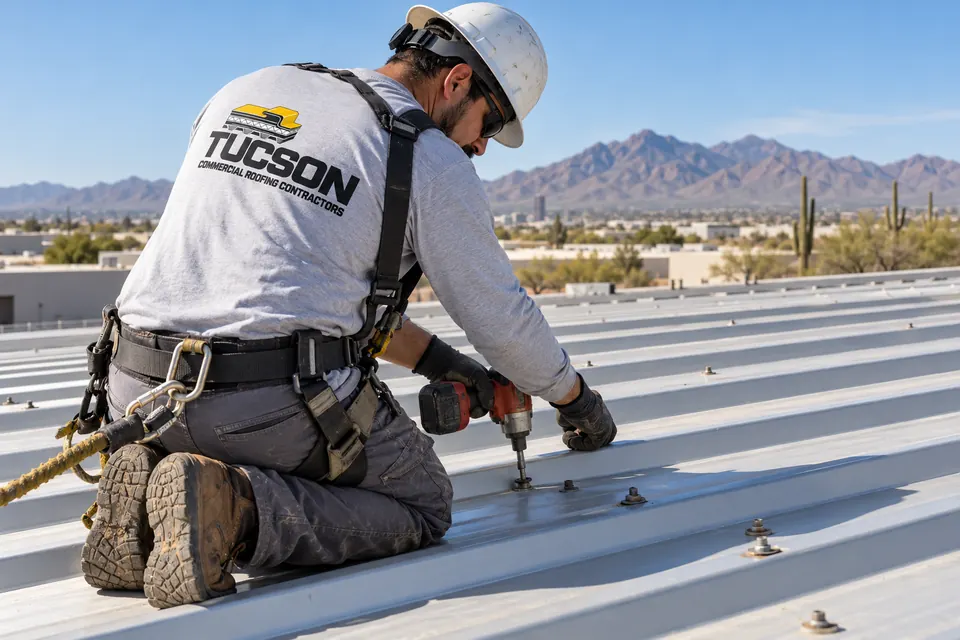
Standing seam panels, fastener and lap repair, or full panel replacement on packing sheds, equipment barns, and mining-support shops south of Tucson.

South of Tucson along I-19, we work as a Sahuarita commercial roofing contractor on metal roofs over agricultural, processing, and mining-support buildings, plus TPO on the offices beside them.
Buildings that process crops or support mining operations south of Tucson put dust, heat, and exhaust onto the roof every working day.

Dust settles in panel laps and gutters, holds moisture after rain, and speeds rust along the lap lines. Exhaust from process equipment carries heat and residue that wear on panels and sealant near the fan curbs.
We inspect the whole panel field, every curb and penetration, and the gutters, then match the fix to how the building is used: new screws and lap sealant, new panels in the worst bays, or a new roof system.
These six problems show up most on Sahuarita work buildings, marked by urgency.
Exhaust from process equipment heats and coats the panels next to each fan curb. Sealant there breaks down first, and the flashing around the curb starts to leak in heavy rain.
Field dust and chaff build up in gutters and valleys between storms. Packed gutters hold wet debris against the metal and overflow under the eave in the first monsoon downpour.
Moisture trapped in dusty laps rusts the overlapping panel edges from the inside out. Orange streaks running down from a lap line mean the steel is thinning at that spot.
Drips onto conveyors, electrical panels, or stored product during a storm mean a roof opening is active now. Mark the spot below and call so the leak gets traced from above.
Daylight panels in packing and shop buildings yellow under strong sun and split outward from their screws. Each split widens every summer until rain drips through the roof there.
Service visits to fans and units leave dented panels and torn sealant along the paths workers walk. Without walk pads, those dents hold water and rust first.
Each row starts with a roof failure common on Sahuarita work buildings.
Older packing sheds and shops hold their panels down with rows of exposed screws, and every washer is a seal that dust and heat wear down.
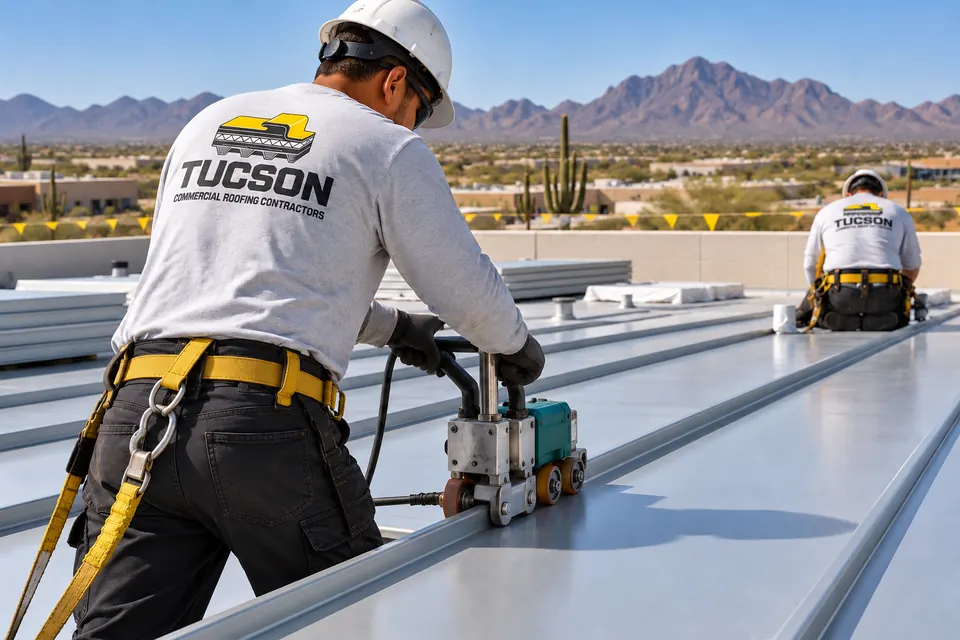
Standing seam panels lock together at raised seams over hidden clips, so far fewer holes pass through the roof above product and equipment.
Curbs around process fans on many plant roofs were sealed with caulk alone, which dries and cracks under constant exhaust heat.
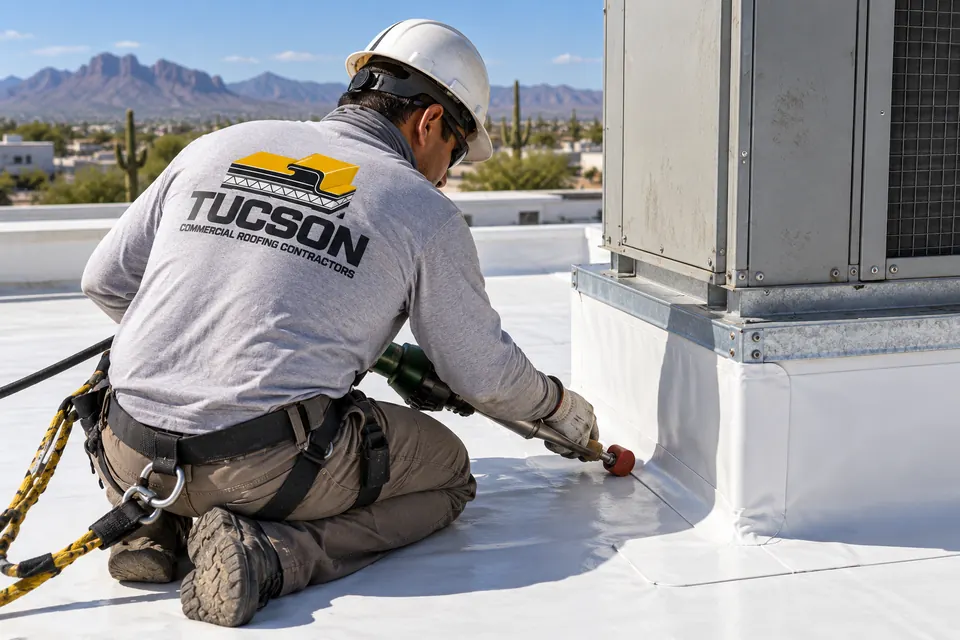
A new roof gets metal curb flashing lapped into the panels, with materials matched to the heat and exposure from each fan.
Service techs crossing the roof to reach fans dent panels and tear sealant along the same routes month after month.
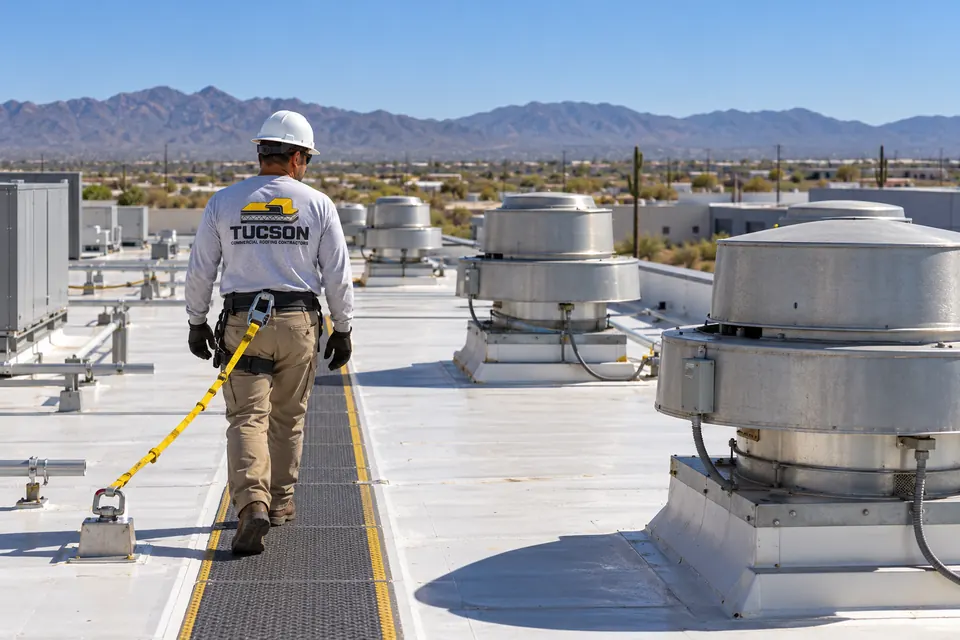
New walk pads and marked paths run from the roof access to each fan and unit, so foot traffic lands on protected areas.
Faded panels over packing rooms and shop floors absorb summer heat, and the space below stays hot well into the evening.
Metal panels with a reflective factory finish, or white TPO on the office section, reflect more sun. Trico customers can ask the utility about current cool-roof programs.
Three services cover most Sahuarita plant, shed, and office roofs.

Standing seam panels, fastener and lap repair, or full panel replacement on packing sheds, equipment barns, and mining-support shops south of Tucson.

Plant roofs with exhaust fans, process vents, and heavy rooftop units, replaced in sections with walk pads and flashing matched to each penetration.

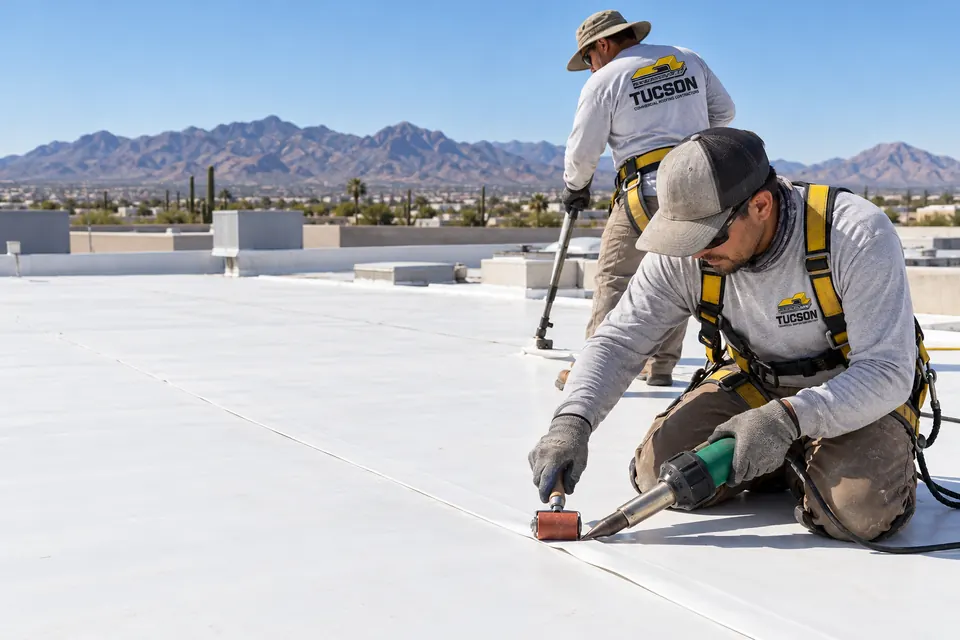
White TPO with heat-welded seams for low-slope offices, labs, and break buildings that sit beside the metal work buildings.
Call and tell us what equipment sits under the leak, whether exhaust fans are nearby, and when the building can shut down a section.
This sequence keeps processing and shop work going while the roof is repaired or replaced.
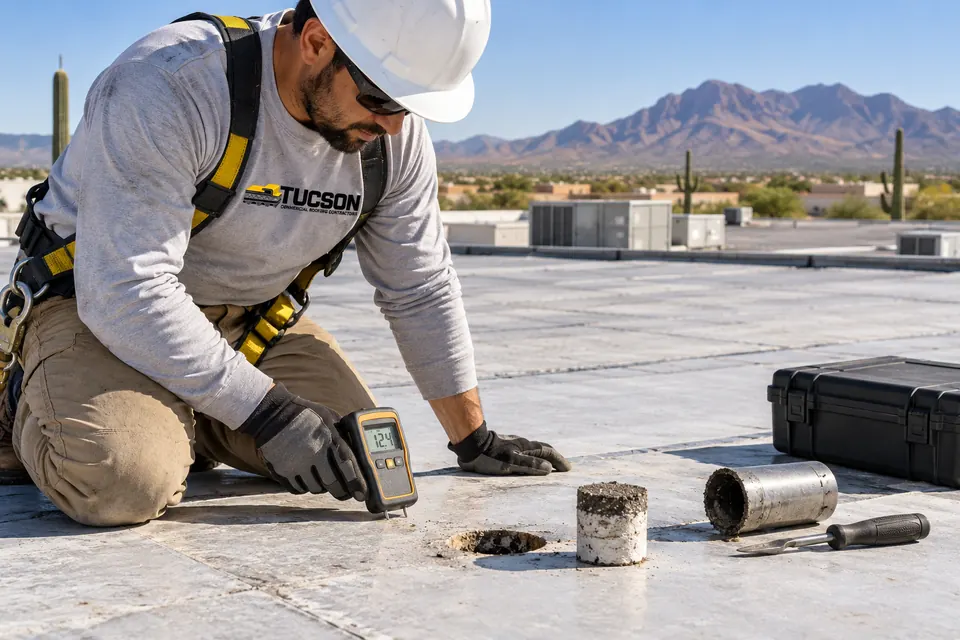
Each panel run, curb, exhaust fan, and gutter is walked and photographed, and rust, loose screws, and failed flashing are marked on a roof plan of the building.
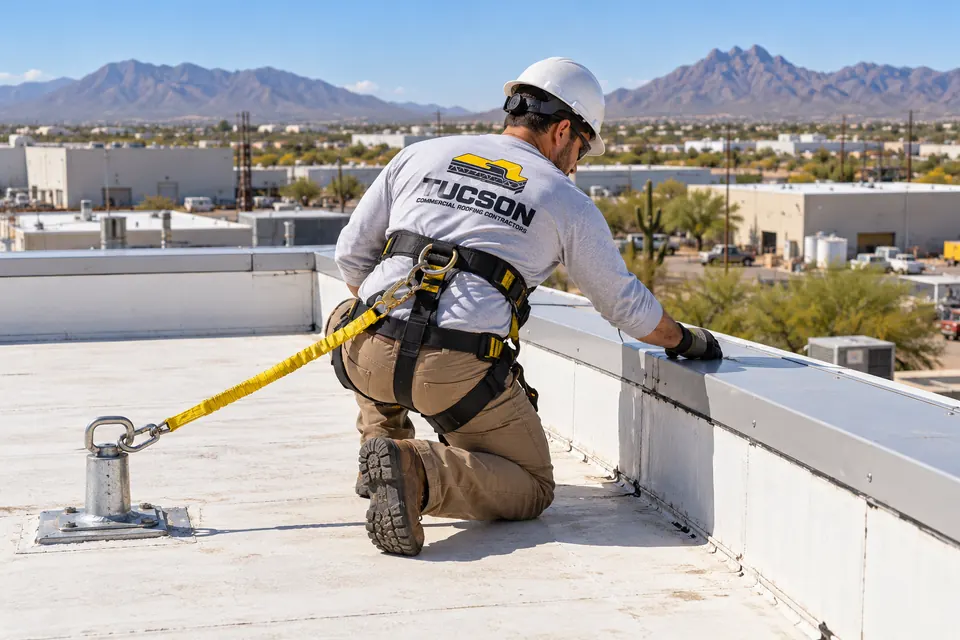
Guardrails or warning lines go up at open roof edges, and temporary paths mark the routes to fans and units before any panels come off the roof.
Rust limited to a few laps calls for a repair. Thinning steel across whole bays, or curbs that keep leaking under exhaust heat, points to new panels or a new roof.
Permits for roof replacement in Sahuarita come from the Town of Sahuarita. Parcels outside town limits go to Pima County, so we check the jurisdiction before filing.
Shutdowns are planned with your operations lead, and panels come off one bay at a time so the lines below the other bays keep running.
Fans, curbs, panel laps, and gutters get a last check, scrap and loose screws are cleared from the roof, and you receive photos of each flashed penetration.


Sahuarita sits south of Tucson on I-19, close to these communities.
Several roofs on one campus inspected together.
Hail damage documented for insurance claims.
Church and community roofs worked around services.
School roofs scheduled around summer break.
Yes, in most cases. Work moves bay by bay, shutdowns are planned around the production schedule, and each opened area of the roof is closed and watertight before the end of the workday, so lines in the other bays keep running.
It does. Dust packed into panel laps and gutters holds moisture after each rain, and that wet layer rusts the steel from inside the lap. Clearing gutters and checking laps once or twice a year slows that damage and catches thinning panels early.
Heat and exhaust break down sealant and coatings near each fan curb faster than anywhere else on the roof. We replace caulk-only seals with metal curb flashing lapped into the panels and pick materials for the exhaust each fan carries.
Programs change, so check with Trico Electric Cooperative for what it offers today. Trico serves Sahuarita, and when a cool-roof incentive is available it typically requires a CRRC-rated roof product. We supply product data for the membrane or panel finish so you can compare it to the current program.
A metal panel with a reflective factory finish keeps more sun off a packing shed than a faded dark panel. Flat office sections stay cooler under white TPO. Both cut the heat the roof passes into the space below during long summers.
The Town of Sahuarita handles permits for commercial reroofing within its limits, with inspections along the way. For a parcel past the town boundary, Pima County Development Services is the permit office instead, and we check the parcel record first so the roof application goes to the right place.
Late spring is the best window for repairs, before monsoon season opens June 15. Larger replacements fit the months after September 30, when the storm season has ended and sections of the roof can stay open longer each day.
Describe the building and what runs under the roof, and we will arrange an inspection around your production hours.
Leave a name and number, and we will call you back about the roof.