TPO Roofing
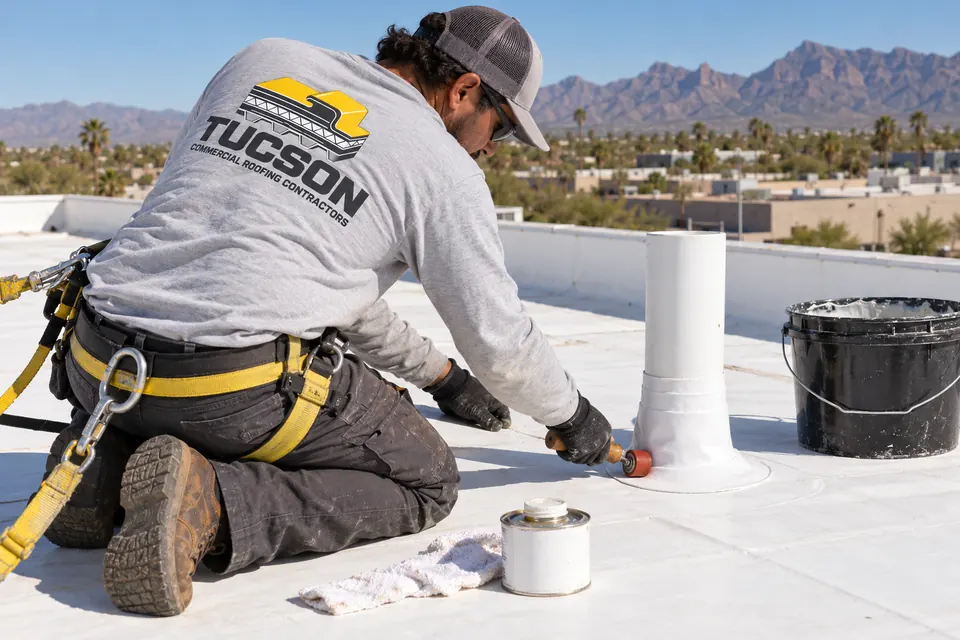
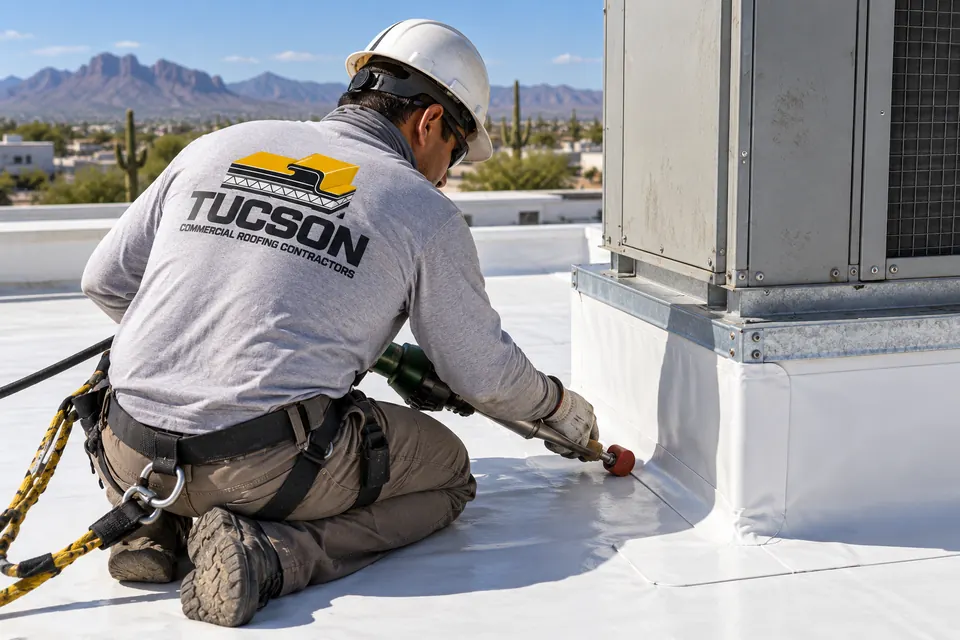
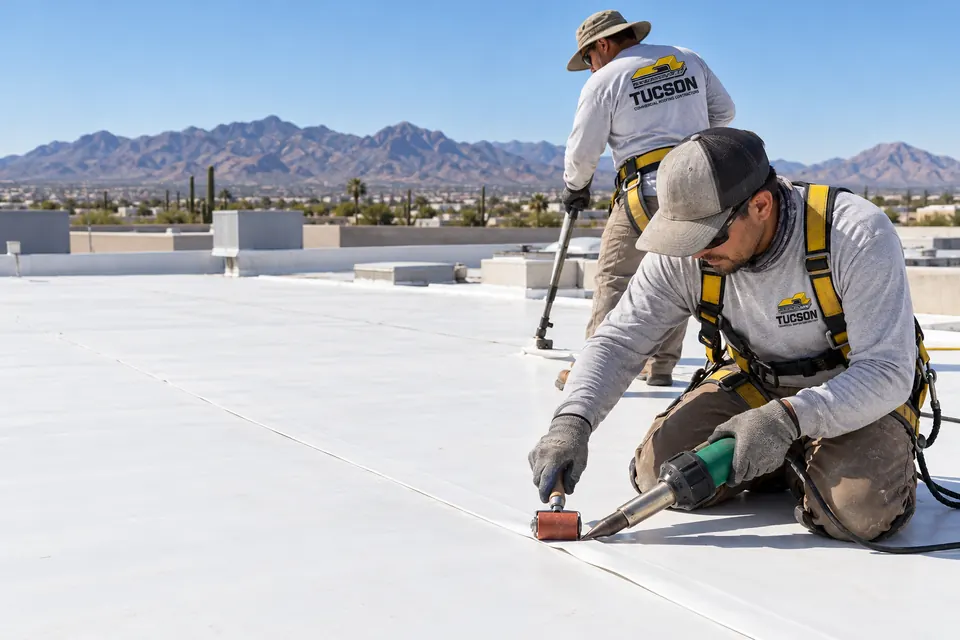
White TPO membrane with heat-welded seams, flashed up each rooftop unit curb and laid over tapered insulation that steers water to drains.

Our Oro Valley commercial roofing contractor work covers medical offices, clinics, and lab buildings, where we install, replace, and repair roofs while people inside keep working and breathing clean air.
Clinics and labs north of Tucson run air handlers all day, and the fresh air intakes on the roof pull in whatever drifts across the membrane during roof work.

Exam rooms, imaging suites, and lab benches sit directly under the deck. A drip through a curb or a strong adhesive smell pulled into an intake can shut a room for the day, so the roof plan starts with where the intakes and units sit.
We map every curb, intake, exhaust stack, and drain, then choose welded TPO or EPDM with low-odor adhesives and set work zones upwind of the intakes that serve patient and lab areas.
Use these signs from the roof and the ceiling tiles below to judge how soon a medical or lab roof needs work.
Membrane flashing that has pulled away from a rooftop unit curb lets water run down the curb wall and show up as a stained ceiling tile below the air handler.
Condensate lines dumping onto the membrane keep one patch of roof wet all summer. Seams near that patch soften and open sooner than the rest of the field.
Any active drip above exam rooms, imaging equipment, or lab benches during a monsoon storm points to an open seam, curb, or penetration and needs a call right away.
Rubber boots on vent and gas pipes dry out in the sun and split at the collar. Hairline cracks show first, then water follows the pipe into the wall.
Lab exhaust fans leave residue on the membrane around their curbs. Discolored or chalky patches mark spots where the roof surface is wearing faster.
Equipment pads and curbs block the path to the drains, so water sits between units for days after a storm and works into any weak lap.
Each benefit pairs a failure we see on medical and lab roofs with what a new roof changes.
Patched curb flashing around older air handlers opens again each summer, and the leak lands right above a treatment room ceiling.
New membrane is flashed up each curb and terminated under counterflashing, so the unit and the roof shed water as one detail.
Solvent-based adhesives used on older roofs pushed strong odors into intakes and forced clinics to close rooms during roof work.
Heat-welded TPO seams and low-odor adhesives for EPDM keep odors low, and work zones are set upwind of the active intakes.
Crowded equipment layouts trap water between curbs, and that standing water wears down membrane laps much faster than open roof.
Tapered insulation and crickets behind curbs send water around equipment to the drains before it can sit.
Dark, aged membranes soak up summer heat over exam rooms and labs, and the rooftop units run longer to keep up.
A white TPO membrane reflects much of that sun, and a CRRC-rated product keeps the roof eligible if a utility offers a cool-roof incentive.
Two membranes cover most medical and lab roofs we work on in Oro Valley.

White TPO membrane with heat-welded seams, flashed up each rooftop unit curb and laid over tapered insulation that steers water to drains.

EPDM sheets adhered with low-odor adhesive, with factory pipe boots and taped laps, on roofs where flexible rubber suits the penetration layout.
Call and tell us which room the water reaches, which rooftop unit sits above it, and whether staff noticed an odor or drip during storms.
This sequence keeps a clinic or lab open while the roof above it is replaced or repaired.
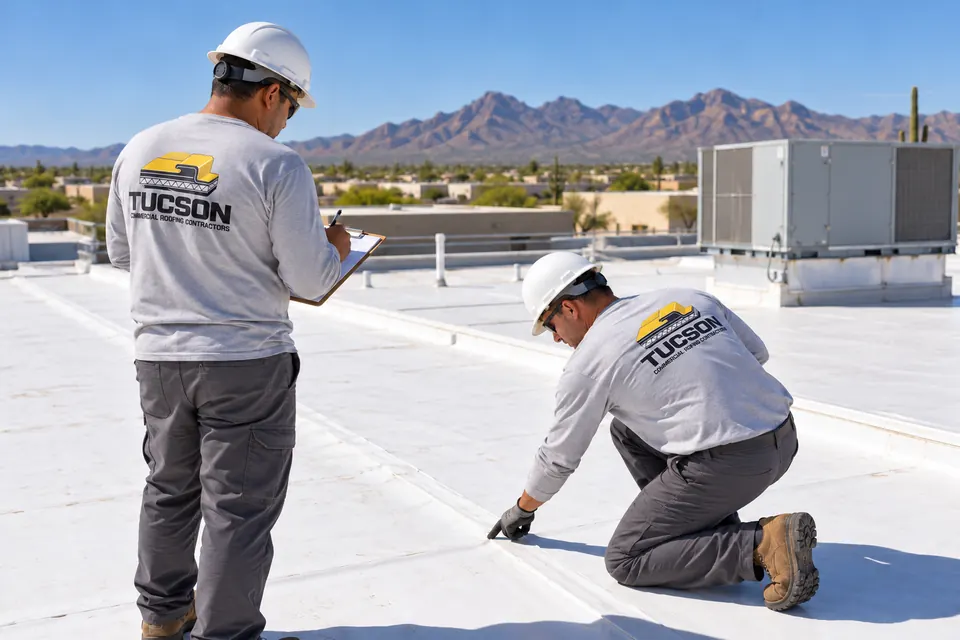
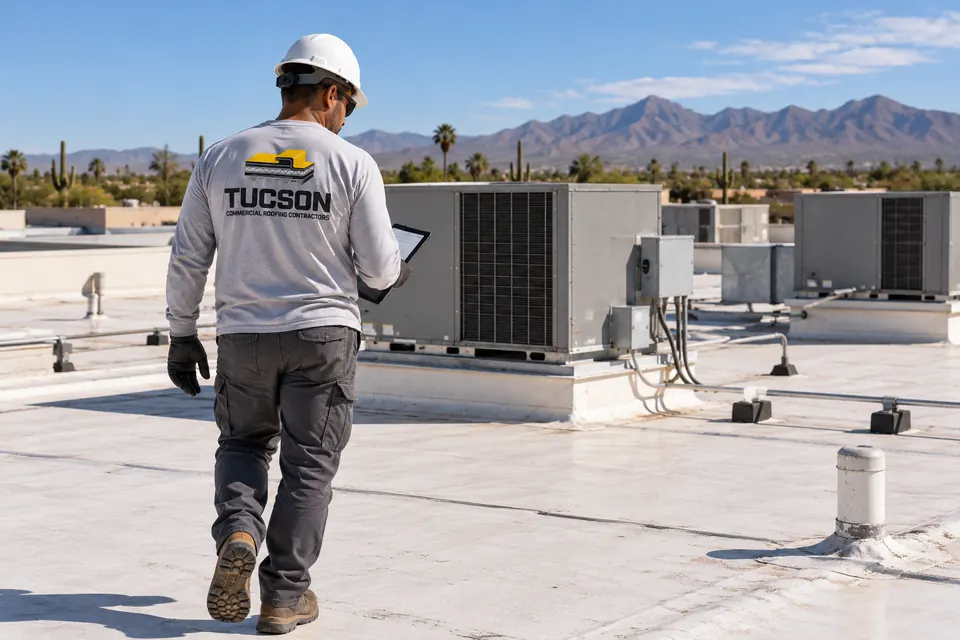
Each curb, intake, exhaust fan, drain, and pipe boot is walked and photographed. Ceiling stains inside are matched to the roof detail above them.
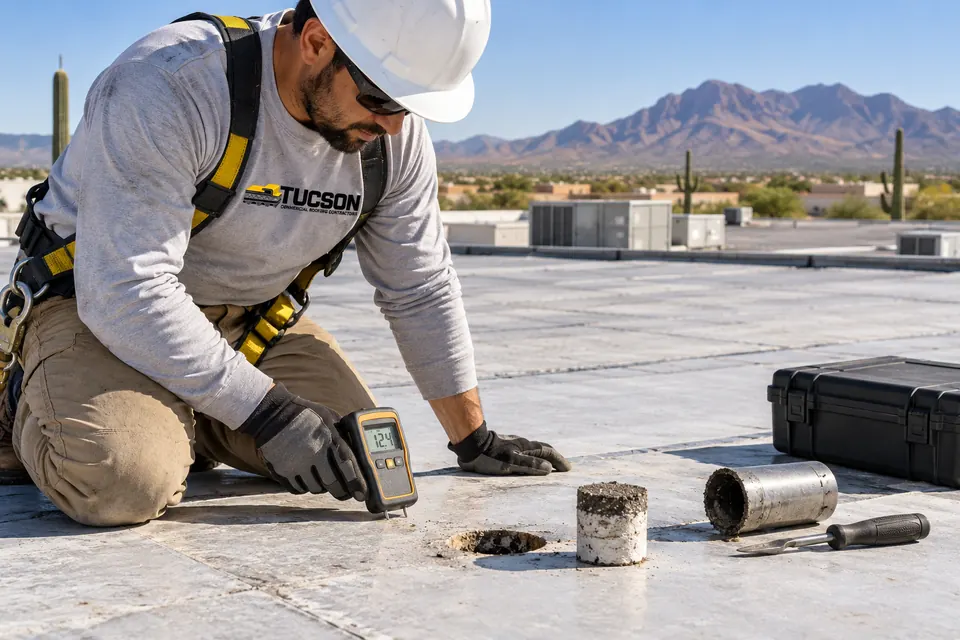
Moisture meter readings and core cuts around units and drains show how much wet insulation sits under the membrane before a recover or tear-off is priced.
Facility managers get a zone map showing which rooftop units shut down, which intakes get covered, and which rooms sit under each day of roof work.
Roof replacements inside town limits go through the Town of Oro Valley, with the required inspections scheduled around the work zones.
Old membrane comes off one zone at a time. New insulation and membrane go down before evening, and curbs are flashed before the zone closes.
Seams get probed, curb flashings and pipe boots get checked, and the facility manager receives photos of every flashed unit and drain.


Oro Valley borders these communities north and northwest of Tucson.
Hangars and metal warehouses along I-10.
Pre-monsoon and fall inspections on distant properties.
Oracle Road retail roofs done tenant by tenant.
Office roofs replaced ahead of rooftop solar.
Yes, most clinics stay open. The roof is split into zones, and each zone is torn off and closed with new membrane before evening. Rooms under the active zone get notice, and the rooftop units over that zone are shut down only while their curbs are being flashed.
Odor control starts with the membrane choice. Heat-welded TPO seams use no solvent, and EPDM can be adhered with low-odor adhesive. We also cover intakes near the work zone, schedule odor-producing steps when the units are off, and keep kettles and solvents off the roof entirely.
White TPO fits most medical offices because its welded seams hold up around rooftop units and it reflects summer heat. EPDM is a good match for lab roofs with many pipe penetrations. Both membranes last roughly 20 to 30 years with good installation and maintenance.
Repeat leaks at a unit come from curb flashing that was patched rather than rebuilt. Heat moves the curb and the membrane at different rates, and each patch opens again. Rebuilding the flashing up the full curb height, with new counterflashing above it, ends the cycle.
We do, because units sometimes need to be lifted or disconnected to flash the curb properly. We share the zone schedule with your mechanical contractor so units go down and come back up within one workday, and condensate lines are rerouted to drains instead of the membrane.
The Town of Oro Valley issues permits for commercial roof replacement inside town limits. Commercial roof replacements generally require a permit and inspections, so we file before work starts and schedule the town inspections around the work zones.
Late spring is the best time, ahead of the June 15 start of monsoon season. A fall inspection after September 30 catches seams, curbs, and boots the storms opened. Two inspections a year keep small curb and boot repairs from turning into ceiling damage over exam rooms.
Send us the building type, the rooftop unit layout, and where leaks show inside, and we will set up a roof inspection.
Leave a name and number, and we will call you back about the roof.