TPO Roofing
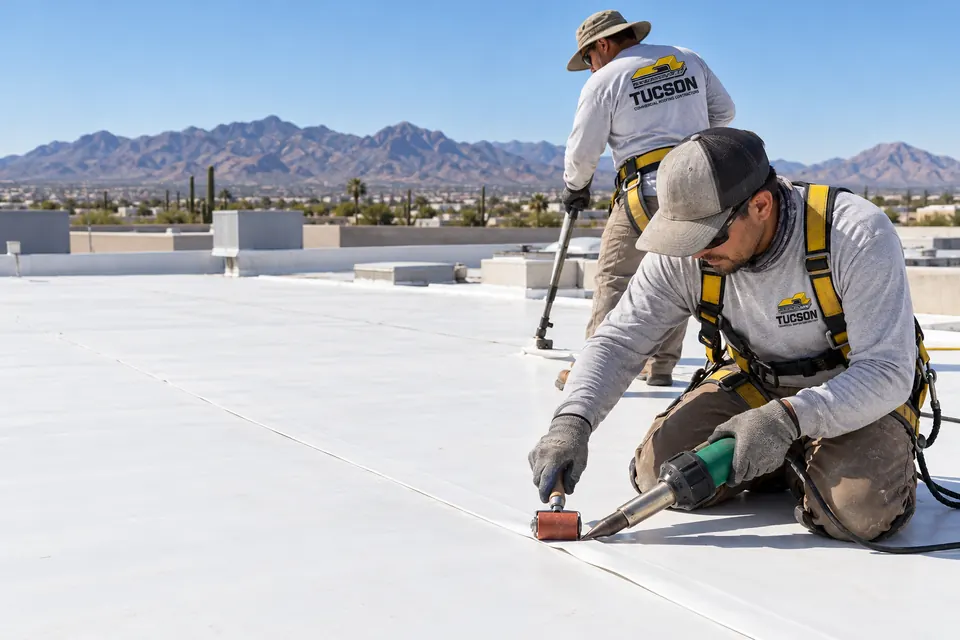
White TPO with hot-air welded seams and no solvent at the laps, a good match for large halls carrying several rooftop units.
Best forHalls and sanctuaries with rooftop units
Look elsewhere ifThe building has a pitched standing seam roof

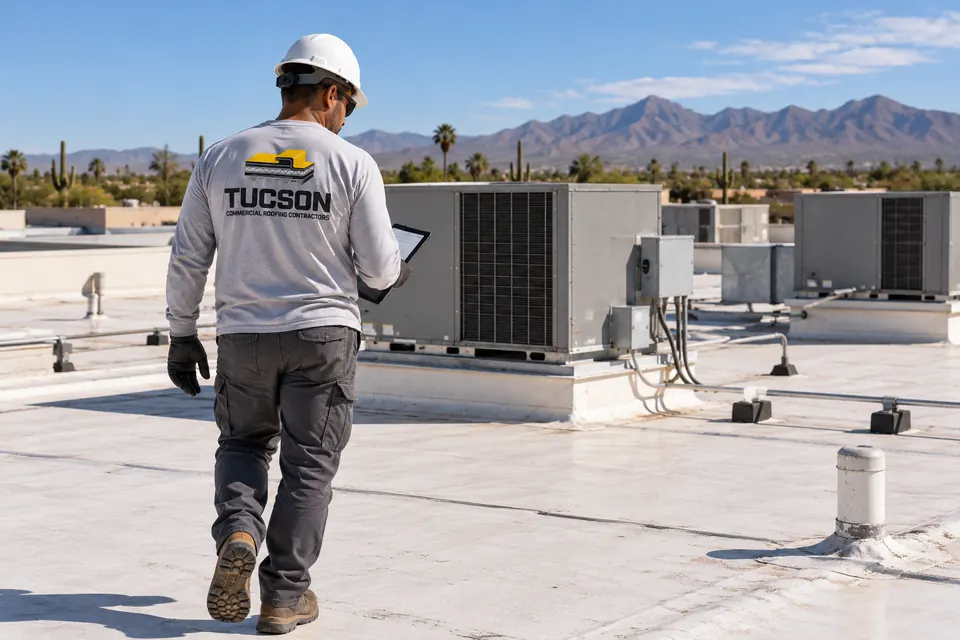
As a Drexel Heights commercial roofing contractor, we repair and replace roofs on churches, community halls, and meeting buildings, scheduling the work around services, events, and evening programs.
Churches and community halls in Drexel Heights fill up on weekends and evenings and sit empty on weekday mornings. That pattern sets when roof work happens and which materials go on.
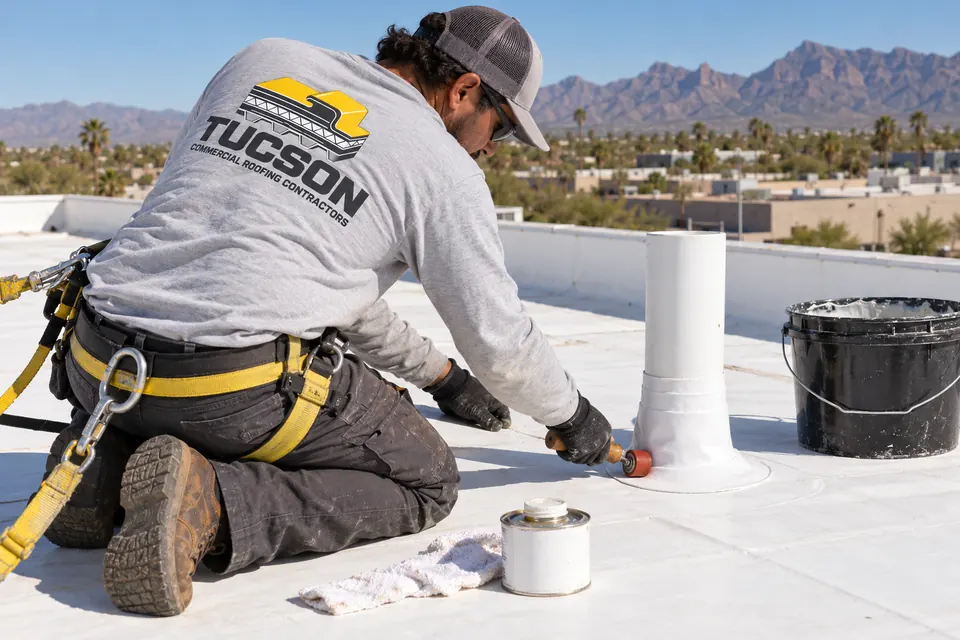
A sanctuary or hall often has a large flat roof with a few rooftop units, kitchen exhaust, and plumbing vents. Leaks over a sanctuary ceiling tend to show up during a service, when the room is full and the weather is wet.
We plan noisy tear-off and fastening for weekday mornings, close the roof before evening programs, and pick adhesives and membranes with low odor near air intakes that feed occupied rooms.
These are the issues we see most on assembly building roofs, sorted by urgency.
Water spotting the ceiling above seating or a stage points to an open seam or penetration directly overhead. Get it patched before the next weekend service or scheduled event in that room.
Aging EPDM and older single-ply roofs lose adhesion at seam tape and laps. Edges curl up after a few hot summers and let monsoon rain run under the sheet.
Fellowship hall kitchens vent grease onto the roof. Grease softens many membranes around the fan curb, and the damaged area spreads outward until the flashing leaks.
Additions built at different times often meet in a valley that holds water. Ponding that lingers for days after a storm wears that membrane faster than the rest of the roof.
Rooftop units over meeting rooms run hard through summer. Vibration and heat crack the flashing at the curb corners, and the first sign is a damp ceiling tile near the supply diffuser.
Gravel stop and drip edge metal on older buildings loosens over time. A monsoon microburst gets under a loose edge and starts peeling the membrane back from the perimeter.
Each row starts with a failure we see on Drexel Heights assembly buildings.
Repeated seam patches on an old membrane keep failing in new spots, and each leak lands during a gathering when the room is full.
A new membrane with welded or factory-taped seams closes the whole field at once, so repairs stop chasing one lap after another.
Solvent-based adhesives on a reroof push strong odors through rooftop air intakes into classrooms, offices, and halls that stay in use.
Low-odor adhesives, heat-welded TPO seams, and intakes covered during application keep fumes out of occupied rooms while the roof goes down.
Black or gray roofing over a large hall soaks up afternoon sun, and the rooftop units fight that heat through every summer event.
White TPO or white EPDM reflects much of the sun, so the roof surface over the hall stays cooler through the hottest months.
Kitchen fans spill grease that breaks down standard roofing around the curb, leaving soft, blistered membrane next to the exhaust.
Grease-resistant membrane around the fan curb, plus a grease containment pad, protects the roof where the kitchen exhaust discharges.
Two membranes cover most church and community hall roofs we replace in Drexel Heights.
White TPO with hot-air welded seams and no solvent at the laps, a good match for large halls carrying several rooftop units.
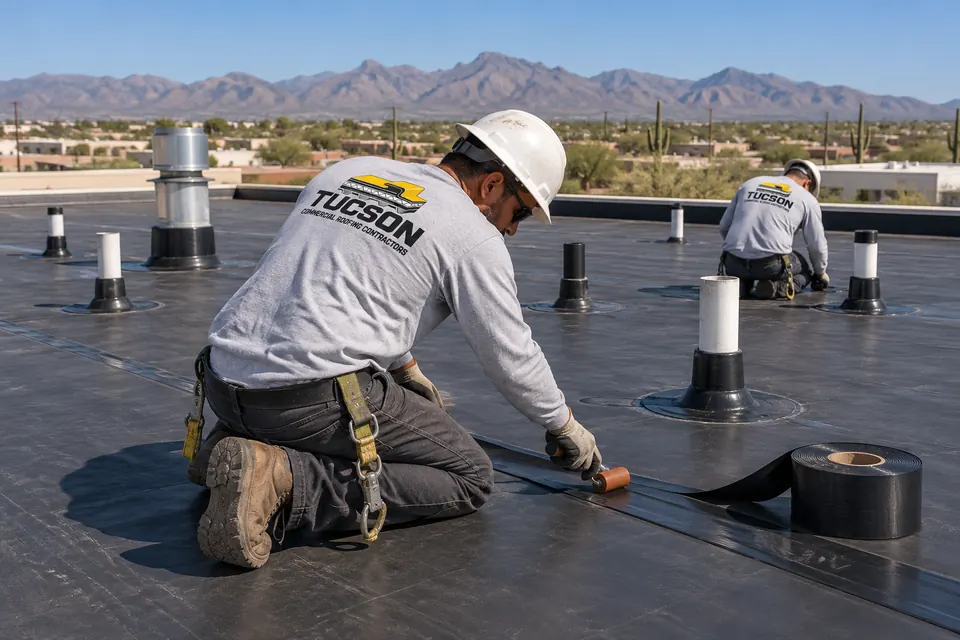
EPDM in large sheets with few seams, installed with low-odor adhesive on roofs crowded with vents and plumbing stacks.
Call and tell us which room the water reaches, when the building is in use, and whether the drip follows heavy rain or wind.
Work follows the building calendar, so services, classes, and evening programs go on as planned.
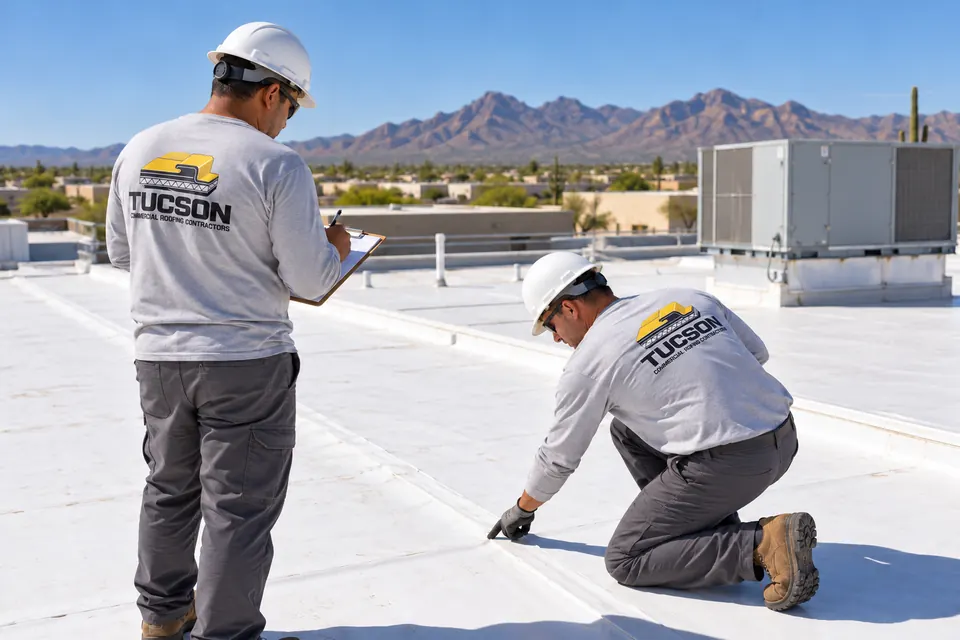
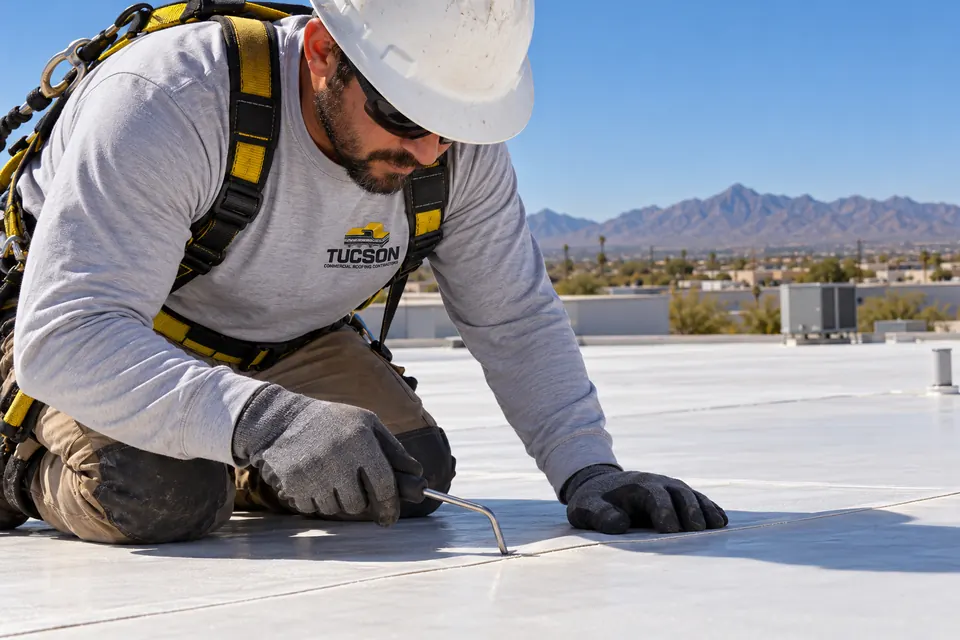
Every seam, curb, vent, and edge is walked and photographed, and ceiling stains in the sanctuary and halls are traced to the spot on the roof above them.
Services, weddings, classes, and evening meetings go on a shared calendar. Noisy tear-off and fastening are placed on weekday mornings when the rooms below the roof are empty.
Drexel Heights is unincorporated, so roof replacement is permitted through Pima County Development Services, with county inspections during the job and at the end.
Rooftop unit intakes near the work area are shut down or covered while adhesive goes down, and low-odor products keep fumes out of the occupied rooms.
Membrane and flashing go down section by section, and any open area is sealed watertight before an evening program or a weekend service starts.
Seam probing, curb flashing checks, and a look at each vent boot come last, followed by photos of the finished roof details for the building committee.
Drexel Heights lies southwest of Tucson, near these communities.
Hail damage documented for insurance claims.
Storefront roofs behind parapets on tight streets.
School roofs worked around the academic calendar.
Several roofs on one campus, phased together.
Yes, with a schedule built around it. Loud tear-off runs on weekday mornings, quiet tasks fill the rest of the day, and every open roof section is sealed before evening programs or weekend services begin in the rooms below.
Low-odor products keep smell to a minimum. Welded TPO seams use heat with no solvent, and where adhesive is needed we choose low-odor types and cover the rooftop air intakes that feed occupied rooms during application.
Tear-off and mechanical fastening make the most noise, from scraping, cutting, and driving plates into the deck. Membrane welding and flashing work are much quieter, so those tasks can run during a midweek meeting or class without disturbing the room below.
Repair fits when leaks trace to a few seams or curbs and the insulation tests dry. Widespread seam failure, wet insulation found in core cuts, or a roof patched every season points to replacing the whole membrane.
Grease from the kitchen exhaust breaks down many roof membranes. The membrane softens, blisters, and finally splits around the fan curb, so we replace that area with grease-resistant material and add a containment pad under the discharge.
Pima County Development Services issues commercial roofing permits for Drexel Heights, which lies in unincorporated Pima County southwest of Tucson. We confirm jurisdiction from the parcel record before filing, then line up county inspections so they fit around services and events.
Late spring is the strongest window, ahead of monsoon season from June 15 to September 30. Fall is the second choice, after the storms end and before holiday events fill the building calendar and limit work days on the roof.
Tell us about the building and its weekly schedule, and we will set up an inspection of the roof.
Leave a name and number, and we will call you back about the roof.