TPO Roofing
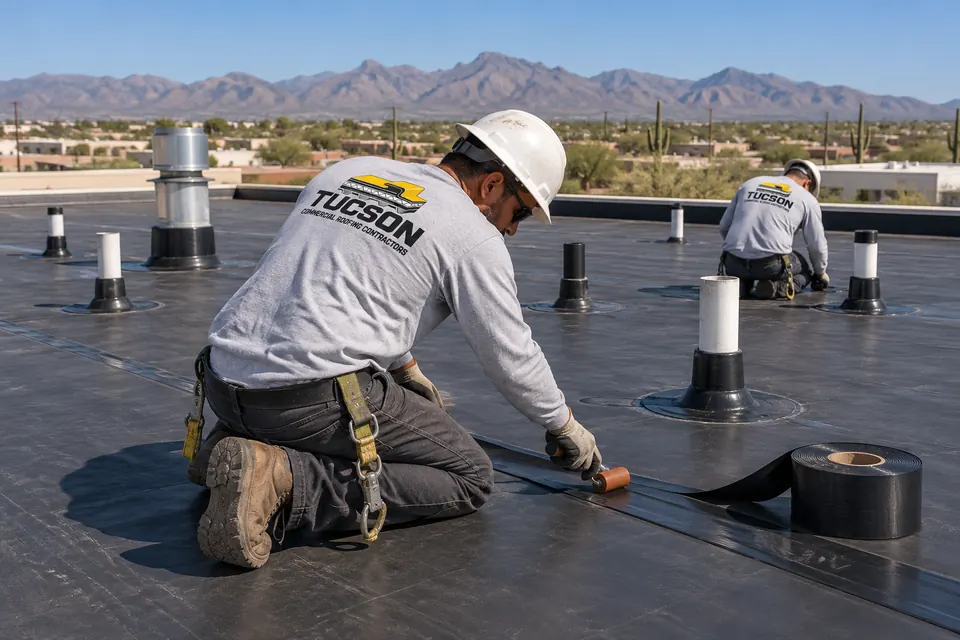
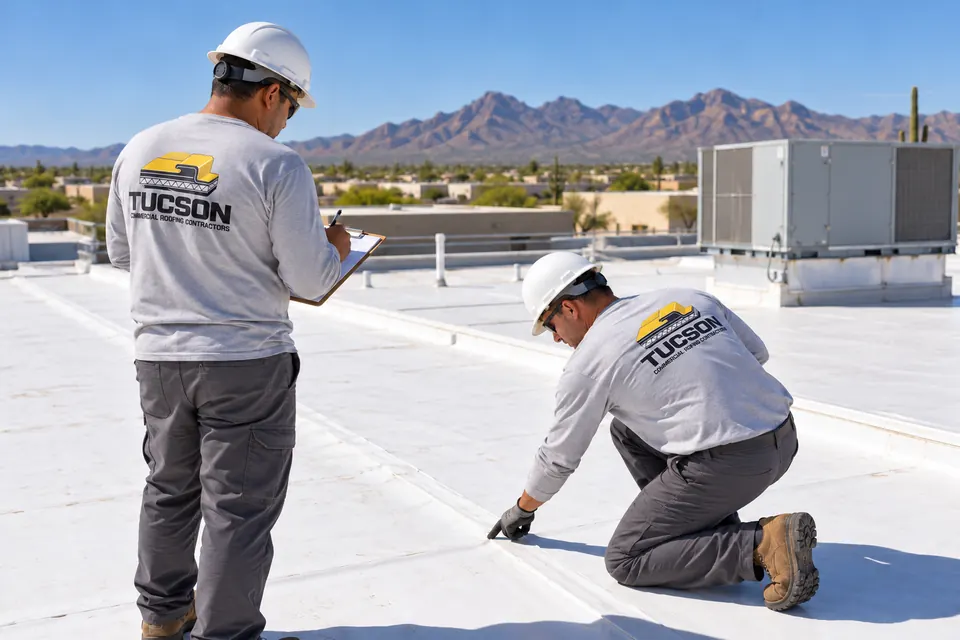
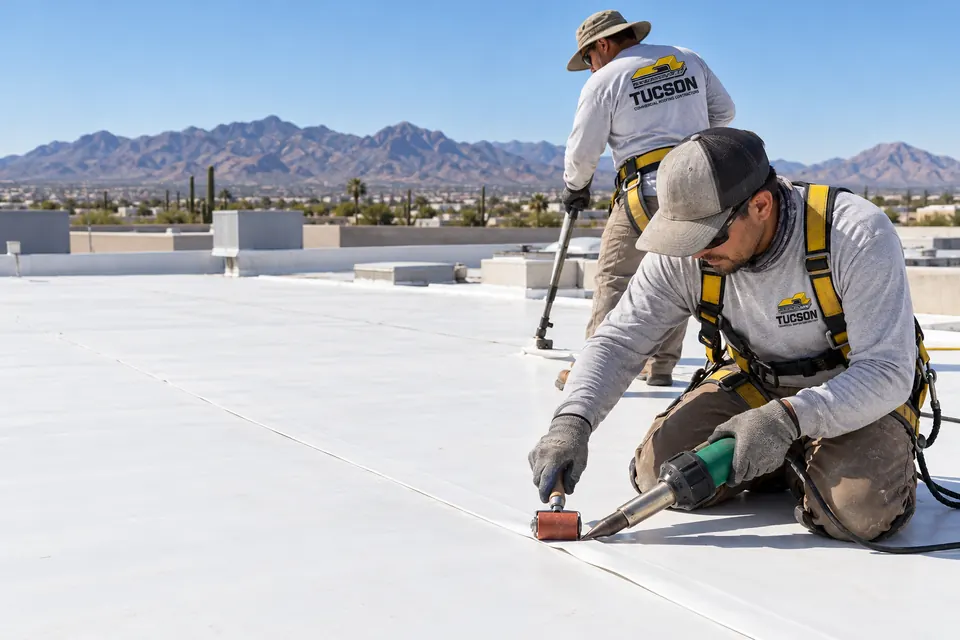
White TPO with welded seams for office and medical buildings with rooftop units, installed over tapered insulation so the drains carry water away.

Along I-19 south of Tucson, we serve as a Green Valley commercial roofing contractor for properties with several roofs, inspecting every building on the campus and phasing repair and replacement together.
Campus properties in Green Valley often have roofs of different ages and systems. Looking at all of them together lets you budget the work in a sensible order.

On many campuses, one building has a newer TPO roof, the one beside it has EPDM near the end of its life, and a covered walkway has metal panels. Handling each leak as a separate call hides that pattern.
We inspect every roof on the property in one visit, rate each by condition, and lay out which buildings need repair now, which need replacement soon, and which need only routine upkeep.
These are the conditions we track roof by roof on Green Valley properties.
Water standing near drains two days after a storm softens the membrane and finds any open seam. On a campus, the same drain layout often repeats on several buildings.
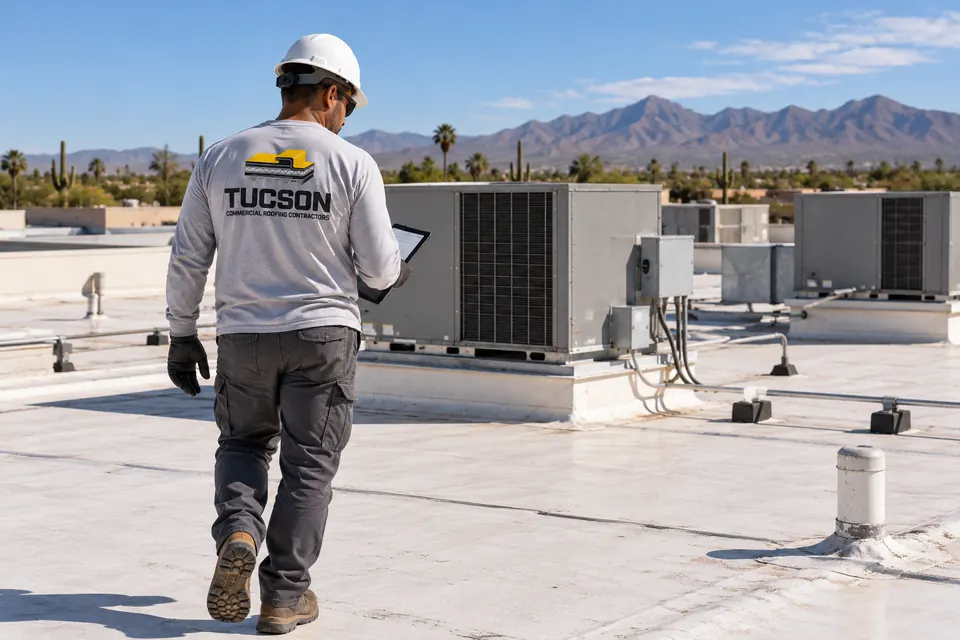
Rooftop HVAC curbs on each building carry flashing that dries out in the sun. A stained ceiling tile below a unit usually traces back to that curb.
Taped EPDM laps on the oldest roofs on the property start to lift at their edges. Lifting laps are the first sign that a building moves up the replacement list.
Ceiling drips into offices, exam rooms, or shops during a storm need attention now. Note the building and room, and photograph the ceiling so the leak can be traced on the roof.
Perimeter edge metal on covered walkways and lower roofs loosens in monsoon gusts. A lifted corner on one building is worth checking on the others built at the same time.
Hail hits every roof on a campus during the same storm. Bruised membrane and dented panels are hard to see from the ground, so each building gets walked after a hail event.
Each row starts with a failure common when several Green Valley roofs age together.
Separate repair calls on separate buildings add up, and nobody sees which roofs on the campus are failing fastest until several leak at once.
Replacing the worst roof first and scheduling the rest by condition turns surprise leaks into planned work that fits the budget year.
Low spots near drains on older flat roofs hold water after monsoon storms, and the membrane wears out fastest right there.
Each new roof goes down over tapered insulation that slopes water to the drains, and the same detail repeats on the next building in the plan.
Curb flashing around rooftop HVAC units on every building ages at once, so leaks show up in several suites during the same storm.
Each replacement includes new flashing at every unit curb and pipe, with seams heat-welded on TPO or taped and primed on EPDM.
Dark or weathered membranes on offices and medical buildings absorb summer heat, and suites under them run warm all afternoon.
White TPO reflects more sun on buildings with rooftop units. Trico serves Green Valley, so ask about cool-roof programs, which usually call for a CRRC-rated product.
Campus roofs here usually fall into one of these three systems.

White TPO with welded seams for office and medical buildings with rooftop units, installed over tapered insulation so the drains carry water away.

Low-odor EPDM installation for occupied buildings where suites stay open during the work, with new pipe boots and taped seams at every penetration.

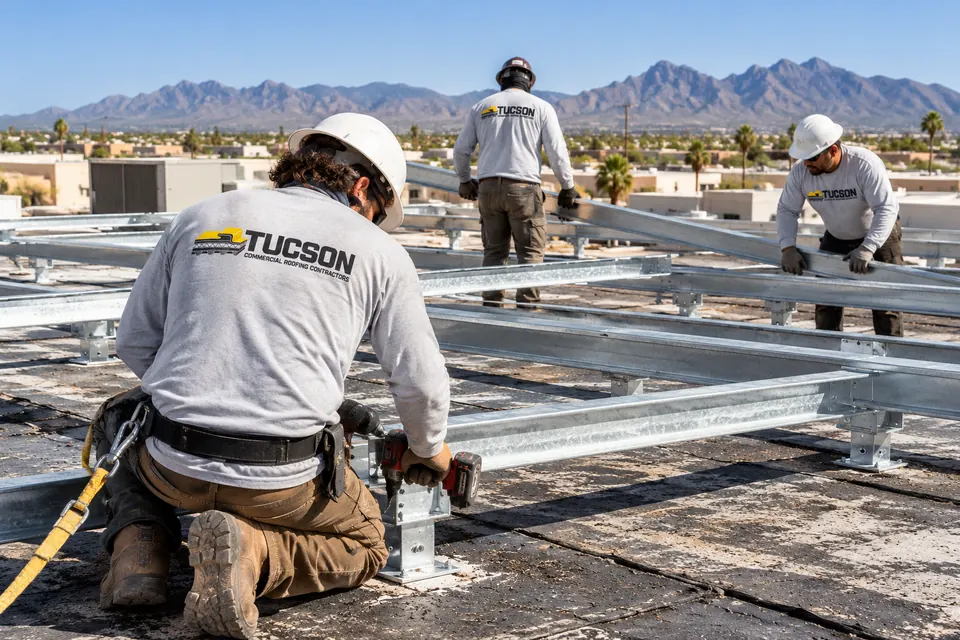
Retrofit framing that adds slope over an old flat roof, or new standing seam panels on covered walkways and canopies across the campus.
Call and tell us how many buildings are on the property, which ones leak, and roughly when each roof was last replaced.
Here is how we inspect several roofs and replace them in a planned order.
Every building on the property gets walked in one visit. Drains, seams, unit curbs, and edge metal are photographed, and each roof gets a condition rating on a campus plan.
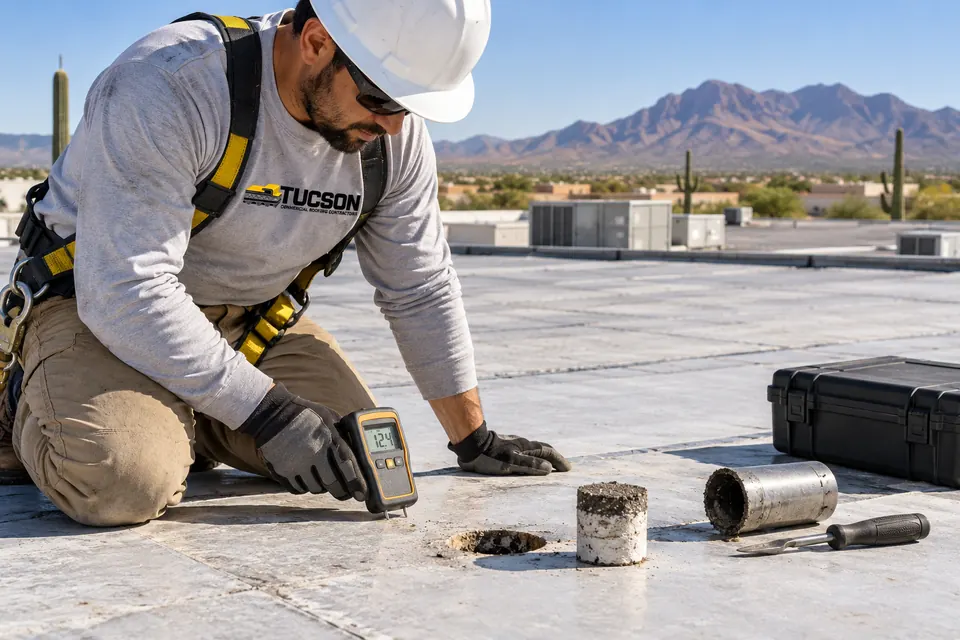
Core cuts and moisture meter readings on each flat roof show where insulation is wet, which decides between a recover and a full tear-off for that building.
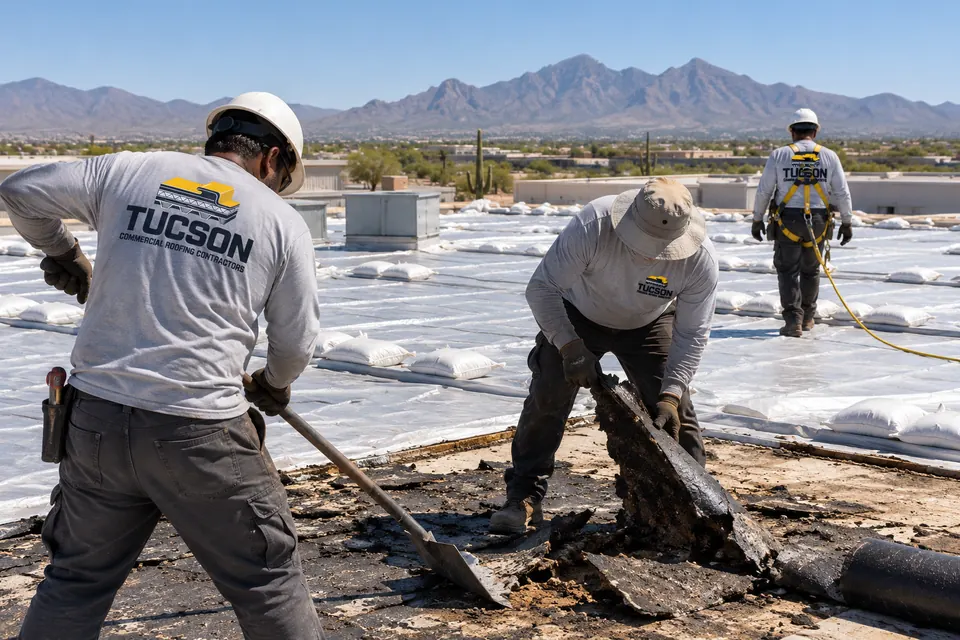
Roofs with active leaks or wet insulation go first. Buildings that need only minor seam and curb repairs get fixed now and slotted for replacement in a later phase.
Pima County Development Services issues the permit for each replacement phase, since Green Valley lies in unincorporated Pima County. County inspections of the roof close out each phase.
Tenants in each building get notice before work starts above their suites, and tear-off moves in sections so each roof is closed and dry every evening.
After each phase, a roof walk checks seams, flashing, curbs, and drains, and the campus plan is updated so the next building is ready to price.


Green Valley sits south of Tucson along I-19, near these communities.
Metal roofs on processing and mining-support buildings.
Hail inspections and insurance documentation.
Roof work scheduled around church services.
School roofs closed before afternoon storms.
Moisture and spread decide it. Leaks at a few curbs, seams, or flashing on an otherwise dry roof call for a repair. Wet insulation across large areas, membrane worn thin in many places, or new leaks after each repair point to replacement. Core cuts and moisture readings show which applies to each building.
Yes, and on most campuses that is the plan. The roof in the worst shape gets replaced first, the others get repairs to seams, curbs, and drains, and each one moves up the schedule as its condition rating drops.
Buildings put up in the same phase got the same membrane, flashing, and drain details at the same time, so they age on the same clock. A campus inspection spots the roofs furthest along, so replacements get spread out instead of landing in one year.
Tenants stay in place in most cases. Work above each suite is announced ahead of time, low-odor methods are used near rooftop air intakes on occupied buildings, and each roof section is sealed before the end of the workday.
That comes down to roof condition and budget. Some owners replace one roof a season; others group two or three buildings together. The plan keeps the leaking roofs first and uses repairs to hold the rest dry until their phase comes up.
Permits come from Pima County Development Services, because Green Valley properties sit in unincorporated Pima County. Each roof replacement phase gets its own permit and county inspections, so the phased schedule includes time for filing and inspection on every building.
Trico Electric Cooperative serves Green Valley. Utility cool-roof programs change, so ask Trico what it offers before the roof system is chosen. When an incentive exists it usually calls for a CRRC-rated membrane or panel, and we provide product data for each roof on the campus.
Send the number of buildings and any leak locations, and we will set up one inspection covering every roof on the campus.
Leave a name and number, and we will call you back about the roof.