Commercial Metal Roofing
Fastener replacement, lap resealing, new standing seam panels, or a retrofit frame that adds slope over an old flat roof.

As a Marana commercial roofing contractor, we install, replace, and repair roofs on metal hangars, shop buildings, and warehouses along I-10.
Large metal buildings near Marana Regional Airport and along the I-10 corridor share a set of roof problems that start small and spread with every summer.

A hangar roof covers a wide clear span, so a few loose fasteners or one open panel lap can drip onto aircraft, parts racks, or a shop floor that has to stay dry. Wind from monsoon storms works at the eave trim above large doors.
We walk the full panel run, check each lap and fastener line, and look at skylight panels, ridge caps, and gutters before we recommend repair, a retrofit, or new panels.
Sort what you see on the roof or inside the building by how soon it needs attention.
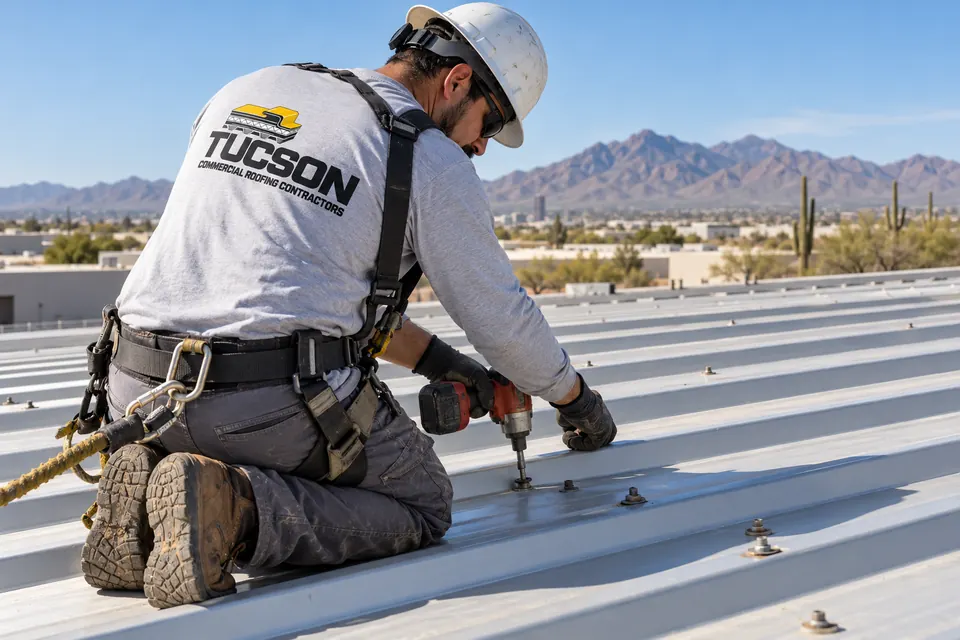
Heat cycling loosens screws along the ribs. Washers dry out, the hole widens, and rain follows the fastener shank into the building.
End laps and side laps lose sealant over time. A stain line under a lap on the ceiling side of the panel shows where water travels.
Water landing on aircraft, stock, or electrical gear during a storm means a lap, skylight, or penetration is open now.
Trim above a large door catches gusts. Rattling or a lifted corner after a storm is the early sign before a panel edge peels.
Translucent panels turn brittle in the sun and crack around their fasteners, which lets water in at the same row every rain.
A gutter too small for a monsoon downpour sends water back under the eave and down the inside face of the wall.
Each benefit below starts with a failure common on Marana metal buildings and warehouses.
Thousands of exposed fasteners each carry a rubber washer that hardens in Marana sun and stops sealing.
Standing seam panels hide their clips under the seam, so the roof surface carries far fewer holes to maintain.
Office additions and low-slope warehouse bays hold water at the drains after a storm, and the old membrane softens there.
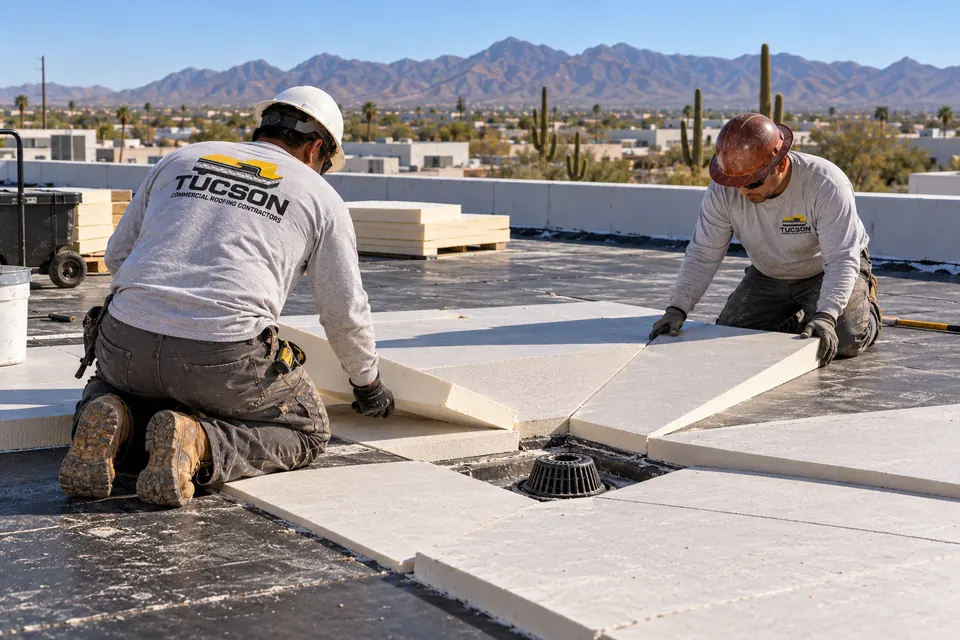
A new TPO roof over tapered insulation moves water to the drains, and the welded seams hold up to standing water better than taped laps.
Dark, chalky panels absorb summer heat, so hangar and shop interiors run hot under bare metal.
Panels with a reflective factory finish, or a white TPO membrane on flat sections, keep less heat in the roof surface.
Old eave and rake trim held by a few screws lifts first when monsoon gusts hit the building.
New trim is fastened on a tighter pattern and lapped so wind has less edge to catch.
These three services cover most roofs we see on Marana hangars, shops, and warehouses.

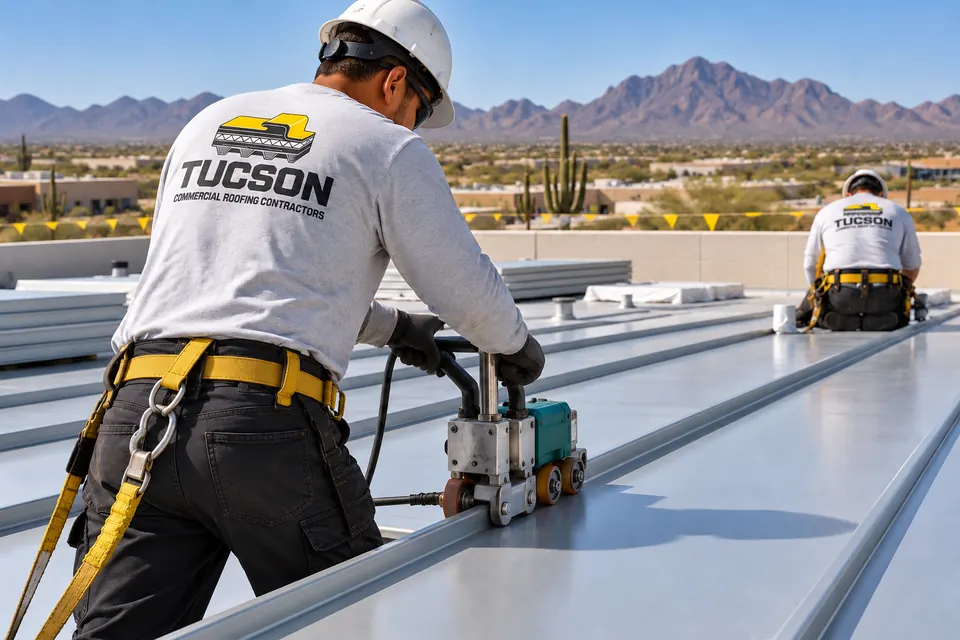
Fastener replacement, lap resealing, new standing seam panels, or a retrofit frame that adds slope over an old flat roof.

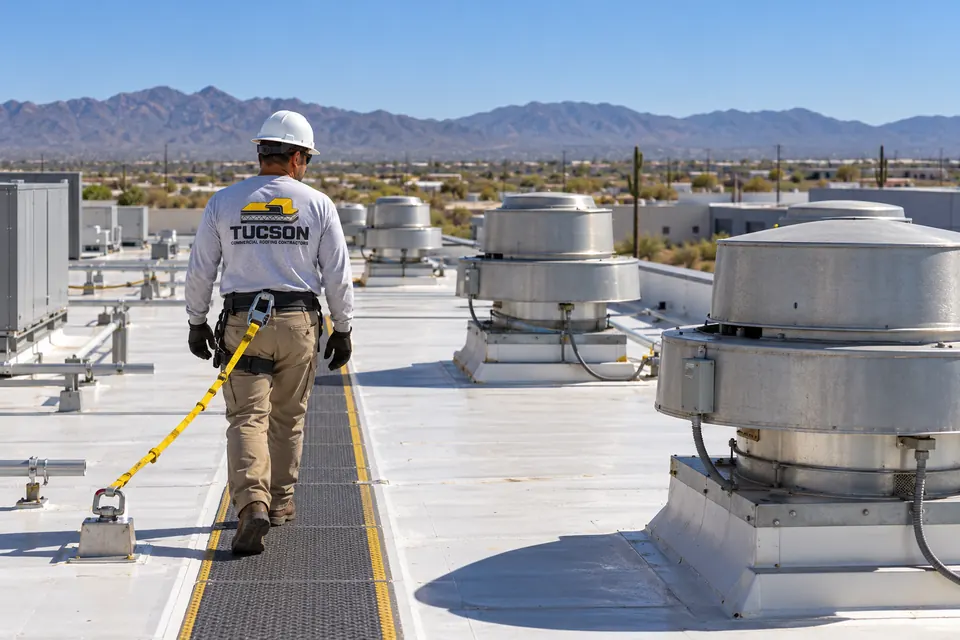
Large distribution and manufacturing roofs replaced in sections, with walk pads around rooftop fans and units.

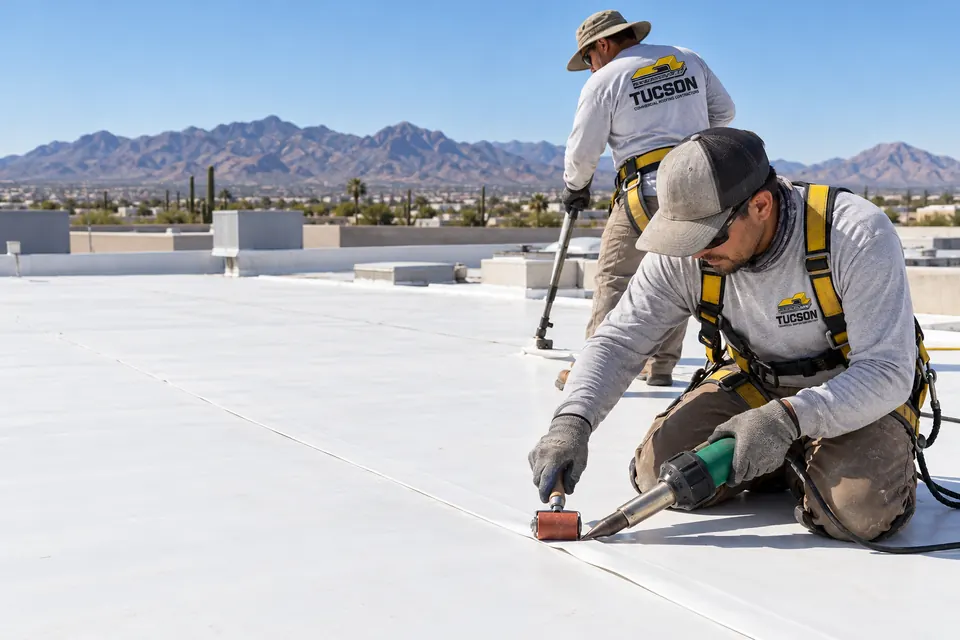
White TPO with heat-welded seams for flat office additions and low-slope warehouse bays that hold water.
Call and tell us where the drip lands, what sits under it, and whether it shows up only in wind-driven rain.
The sequence below fits a working hangar or warehouse that has to stay open during the job.
Every panel run and flat section gets walked. Loose fasteners and open laps are marked, and skylights, trim, and gutters are photographed.
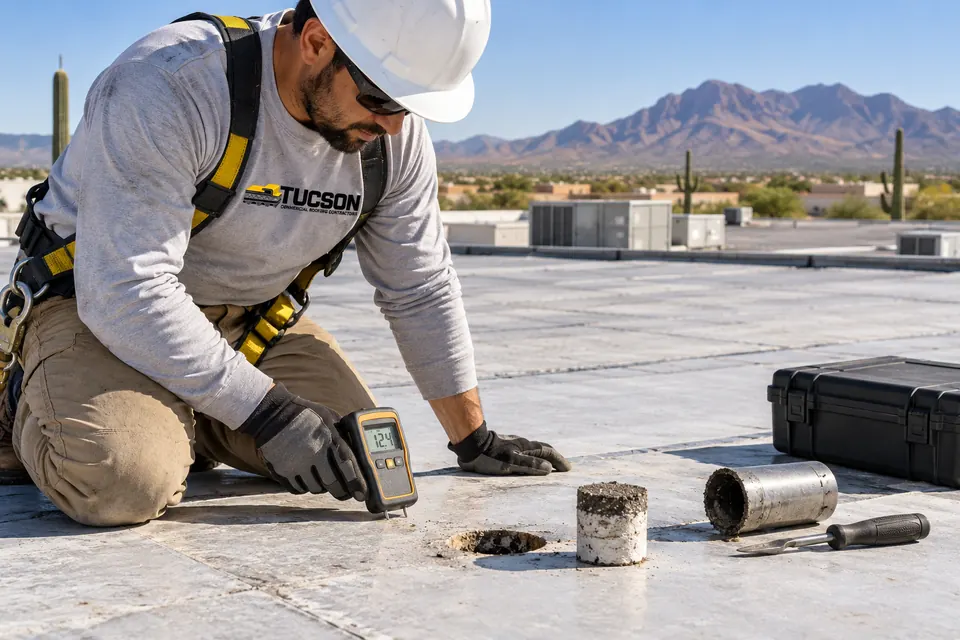
Office additions and low-slope bays get a moisture meter reading and a core cut, so wet insulation shows up before anyone prices a recover.
A fastener and lap repair fits sound panels. Rusted laps across whole bays point to new panels or a retrofit frame.
Roof replacement inside town limits is permitted through the Town of Marana, and the permit card stays on the property until final inspection.
Panels come off and go back on one bay at a time, so hangar doors and loading areas below stay usable most of each day.
We check each fastener row, lap, flashing, and gutter outlet, clear scrap from the gutters, and hand over photos of the finished details.


Marana sits at the northwest end of our coverage, next to these communities.
Medical and lab buildings with rooftop air intakes.
Retail center roofs worked tenant by tenant.
Older low-slope roofs that pond after storms.
Inspections timed before and after monsoon.
Replacing fasteners makes sense when the panels themselves are solid and the leaks trace to screws and washers. If the panel laps and cut edges are rusting across whole bays, new panels or a retrofit frame lasts longer than another round of screws.
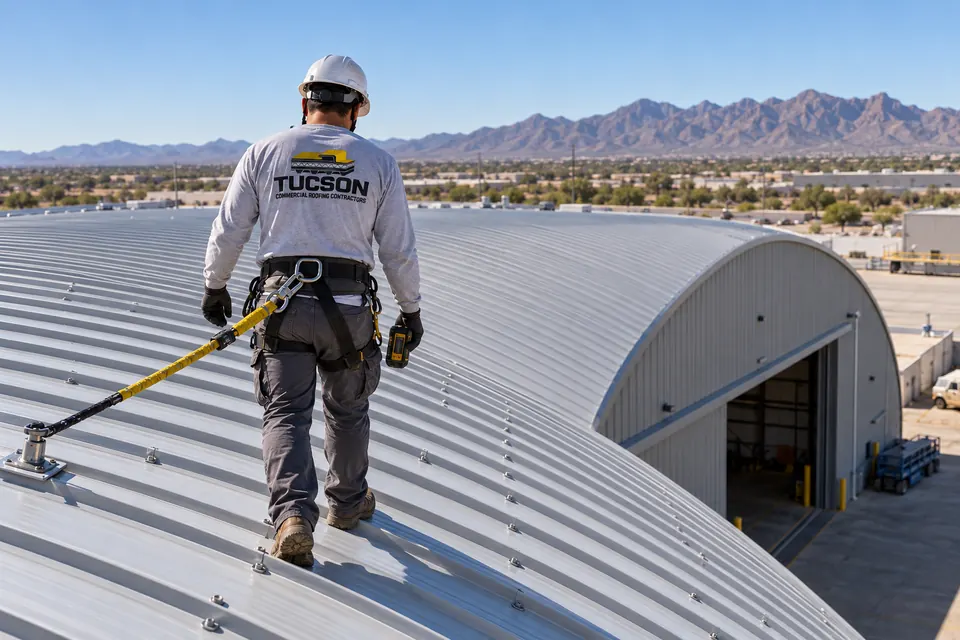
Yes. Curved panels are replaced or resealed bay by bay. We tie off to anchors on the roof, work from the ridge down, and keep the opening under each bay covered at the end of every workday.
Wind-driven rain gets pushed sideways into laps, trim, and skylight edges that stay dry in a straight-down rain. That pattern usually points to open side laps or loose eave trim on the windward wall.
We install and repair TPO and EPDM on low-slope warehouse roofs and office additions. Those sections get a moisture check first, because wet insulation decides between a recover and a tear-off.
Work moves one section at a time, with the area under that section marked off. Loading doors and aisles in the other sections keep running, and each section is watertight before the crew leaves.
Work inside Marana town limits is permitted through the Town of Marana. Properties just outside the town line fall under Pima County Development Services, so we confirm the jurisdiction from the parcel before filing.
Late spring is the best window. Monsoon season runs from June 15 to September 30, so fasteners, laps, and gutters repaired before mid-June are ready for the first heavy storms.
Tell us about the hangar, shop, or warehouse, and we will set up an inspection of the roof.
Leave a name and number, and we will call you back about the roof.