TPO Roofing
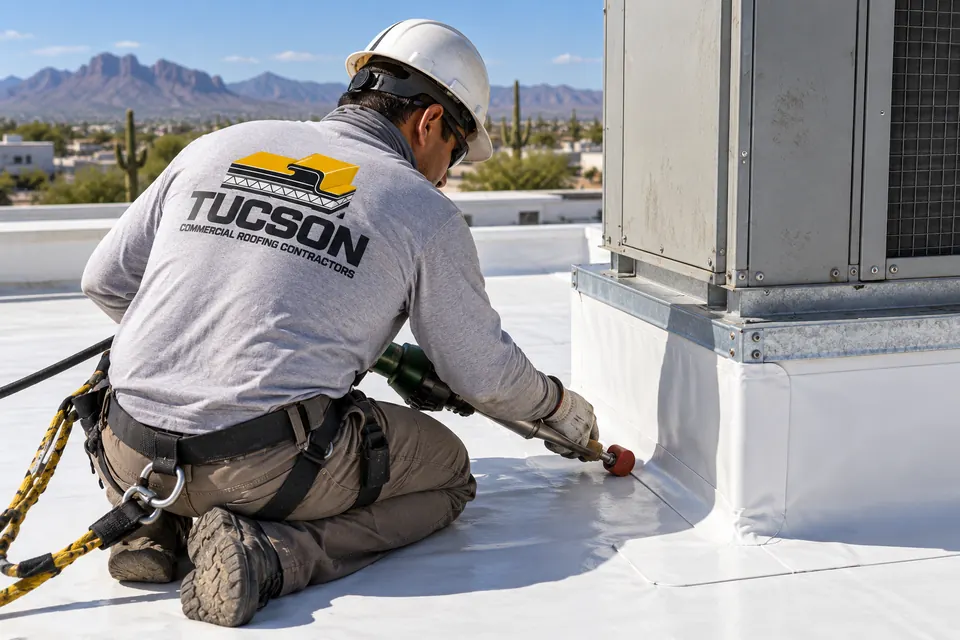
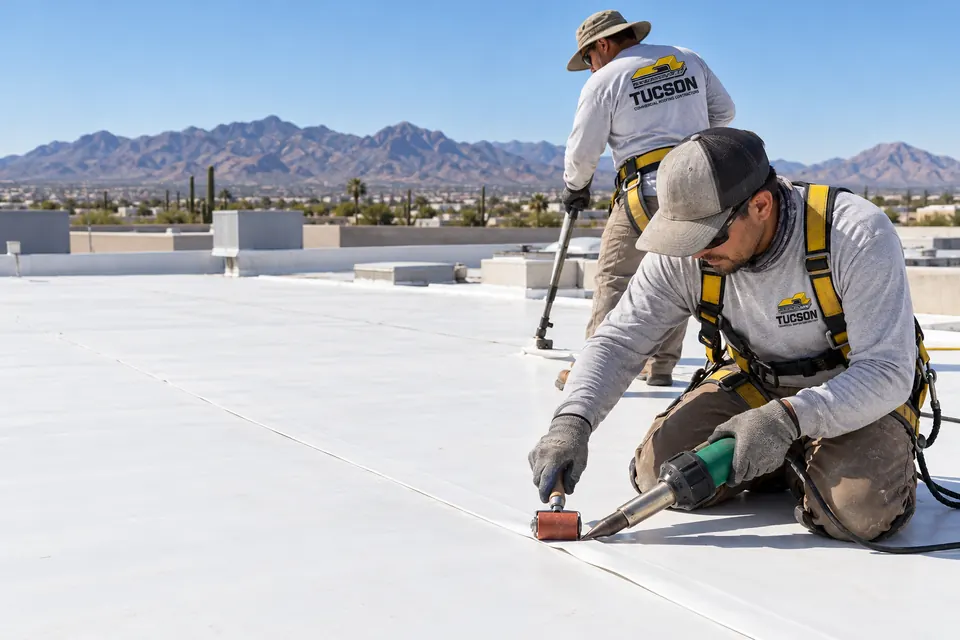
White TPO membrane, heat-welded at every seam and turned up the parapet, for storefront roofs carrying one or two rooftop units.
Best forStorefronts and offices with rooftop units
Look elsewhere ifThe building has a sloped metal roof

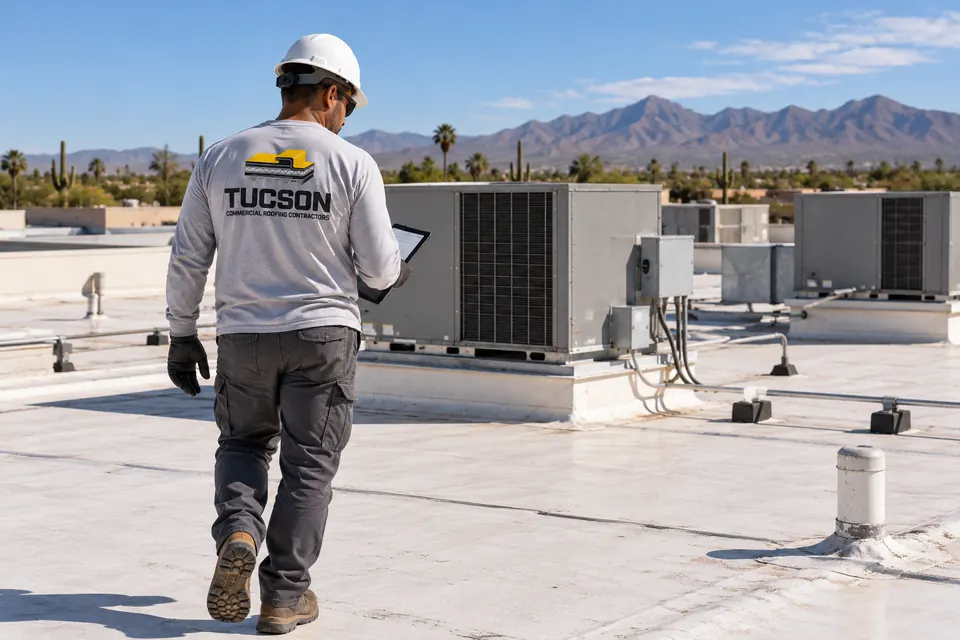
As a South Tucson commercial roofing contractor, we repair and replace flat roofs on storefronts, small shops, and offices that sit behind parapet walls on narrow streets.
Many South Tucson commercial buildings are one-story storefronts with flat roofs hidden behind parapets. Those walls trap water and heat, so most leaks start where the roof meets the wall.
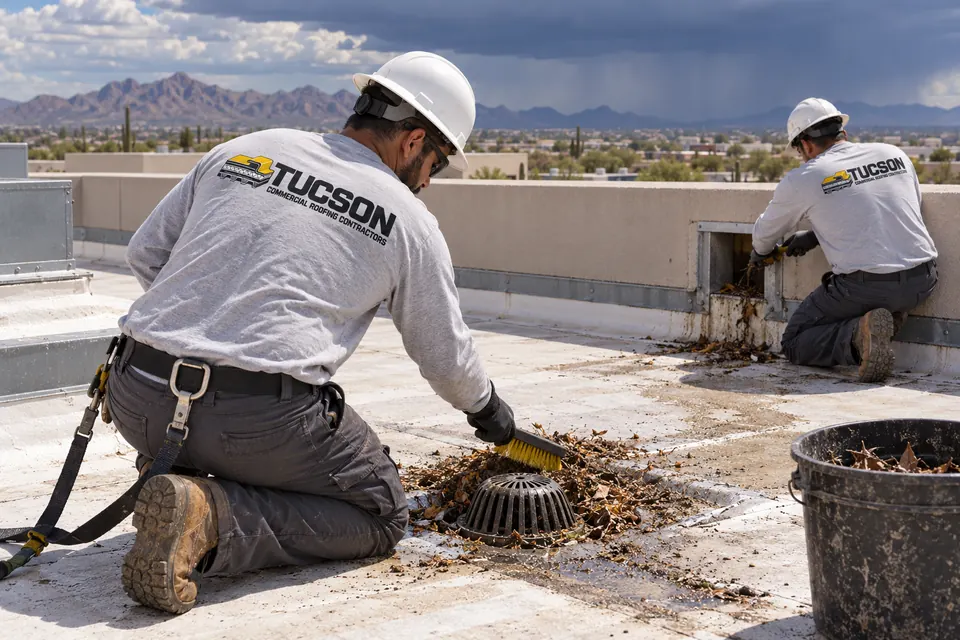
A parapet roof drains through a few scuppers or interior drains. When one scupper clogs with leaves, sand, or trash, monsoon rain backs up against the wall and finds the gap behind old base flashing.
We check the base flashing, the coping on top of the wall, and every scupper box. Stucco cracks just above the roof line get noted too, since water enters there and runs down inside the wall.
These are the issues we find most often on parapet roofs, ranked by how soon they need work.
Heat moves the membrane and the wall at different rates. Over several summers the flashing splits at inside corners, and water running down the parapet slips behind it into the roof deck.
Debris packed into a scupper turns the roof into a shallow pool during a monsoon storm. Once the water rises above the flashing height, it pours into the ceiling below the parapet.
Coping joints open as their sealant dries out. Rain then soaks the top of the parapet and shows up as stains on the inside face of the wall, often far from the roof leak itself.
Low spots along the parapet hold water for days after a storm. Standing water there softens old membrane laps and keeps moisture against the base flashing until it gives way.
Brown rings on ceiling tiles over the front display area point to an active leak at the parapet, a scupper, or a rooftop unit curb. Call before the next storm reaches the building.
Small storefront roofs often carry one or two rooftop units on curbs patched with mastic many times over. Layers of mastic crack in the sun and hide open flashing underneath.
Each row pairs a common storefront roof failure with what a new roof changes.
Patched base flashing on an older parapet roof keeps opening at the same inside corners each summer, so leaks return after every repair.
A new membrane runs up the parapet as one continuous piece with welded or taped corners, and fresh coping caps cover the wall top.
Small scuppers set too high in the parapet leave an inch or more of water sitting on the roof after each monsoon burst.
Replacement scupper boxes are set level with the roof surface, and tapered insulation crickets behind them steer water straight to each outlet.
Dark, weathered roofing surrounded by parapets absorbs summer heat, and small shops under it lean hard on one or two aging rooftop units.
A white TPO membrane reflects much of that sun, which lowers the roof surface temperature over the sales floor and the stockroom.
Several roof layers stacked over the years add weight to an older deck and hide wet insulation that keeps rotting the boards.
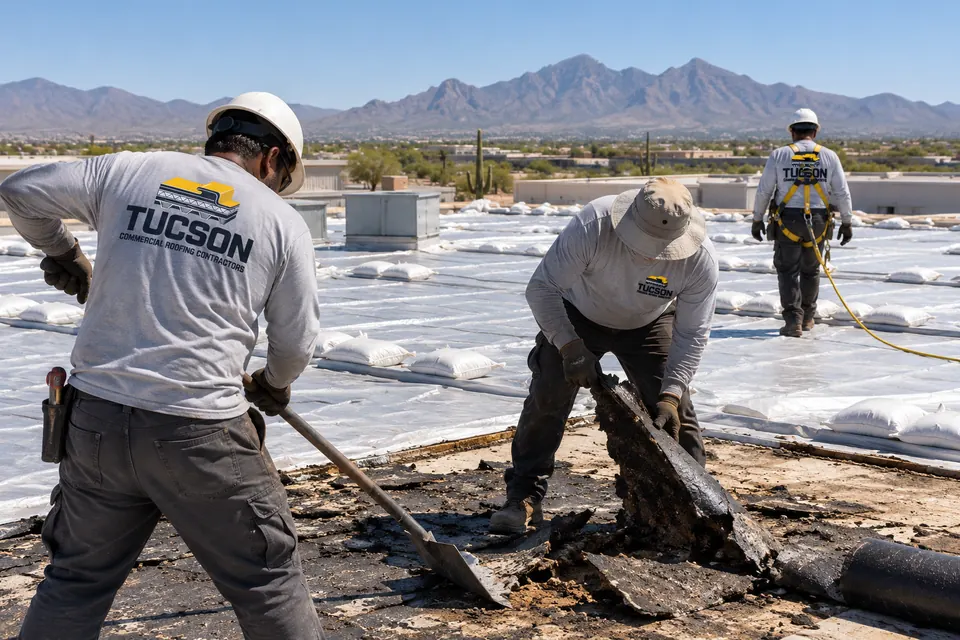
Tearing off down to the deck exposes damaged boards for replacement before new insulation and membrane go down as a single system.
Two membrane systems fit most parapet storefront roofs we replace in South Tucson.
White TPO membrane, heat-welded at every seam and turned up the parapet, for storefront roofs carrying one or two rooftop units.
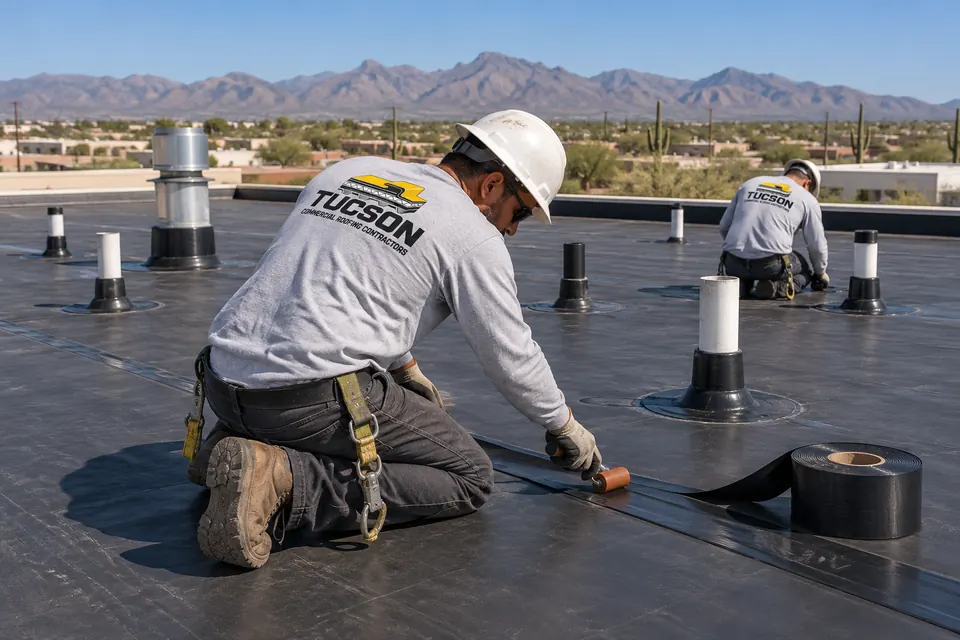
Black EPDM sheets with taped seams, a fit for small roofs crowded with vents, pipes, and older penetrations close to the parapet.
Call and tell us how many scuppers the roof has, where water stands after rain, and how a truck reaches the building from the street or alley.
Small parapet roofs on busy streets need careful staging. This is the sequence we follow.
Each parapet wall, coping joint, scupper, and rooftop unit curb gets checked and photographed. Ceiling stains inside are matched to the spot on the roof where water gets in.
Core cuts near the walls and scuppers show whether the insulation under the membrane is dry. Wet boards there decide between a recover and a full tear-off.
Roof replacement inside city limits is permitted through the City of South Tucson, and inspections follow the permit through the job until final sign-off.
Narrow frontage leaves little room for a dumpster or a lift to the roof. Loading runs from the alley or street at off-peak hours so storefront entries stay open to customers.
Old roofing comes off one section at a time, new insulation and membrane go down, and the parapet flashing is finished before work stops each evening.
Seams, corners, coping joints, and scupper boxes get a last look, and we run water through each scupper to confirm it drains clear to the downspout.
South Tucson sits inside the City of Tucson, south of downtown, close to these service areas.
Church and community roofs worked around occupancy.
Hail inspections and documented storm damage.
Aging flat roofs with drainage trouble.
School roofs scheduled around the academic calendar.
Most parapet leaks start at the base flashing or the coping. Heat splits the flashing at inside corners, and open coping joints let rain soak into the wall, where it travels down and drips inside near the roof line.
Yes, when the membrane across the rest of the roof is dry and intact. We cut back the old flashing, run new flashing up the wall and over the top, and cap the parapet with new coping metal. A core cut first confirms the insulation is dry.
Clean scuppers before monsoon season starts on June 15 and again after each big storm. A single plastic bag or a drift of blown sand in the scupper box is enough to hold water on a parapet roof and push it over the flashing.
Shops stay open in most cases. Work runs one section of roof at a time, materials load from the alley or during slow hours, and the entry and sidewalk stay clear. Each section is closed and watertight before work ends for the day.
Tight frontage is common here. We look at the alley, the rear lot, and street parking during the inspection, then plan smaller loads of old roofing hauled off more often, or a trailer parked for short periods.
Yes. Where two roofs meet at a shared parapet, we flash our side of the wall and check how water drains from the neighboring roof, since runoff from next door often ends up at your scupper. Photos of that joint go to the owner.
The City of South Tucson issues permits for commercial roof replacement inside its city limits. South Tucson is surrounded by the City of Tucson, so we confirm from the parcel which jurisdiction covers the address before filing any paperwork.
Late spring works best. Monsoon season runs June 15 to September 30, so a new roof or a reflashed parapet finished before mid-June faces the first storms ready. Fall is the next good window, once the season ends.
Tell us about the storefront, the parapets, and street access, and we will set up an inspection of the roof.
Leave a name and number, and we will call you back about the roof.