Commercial Metal Roofing
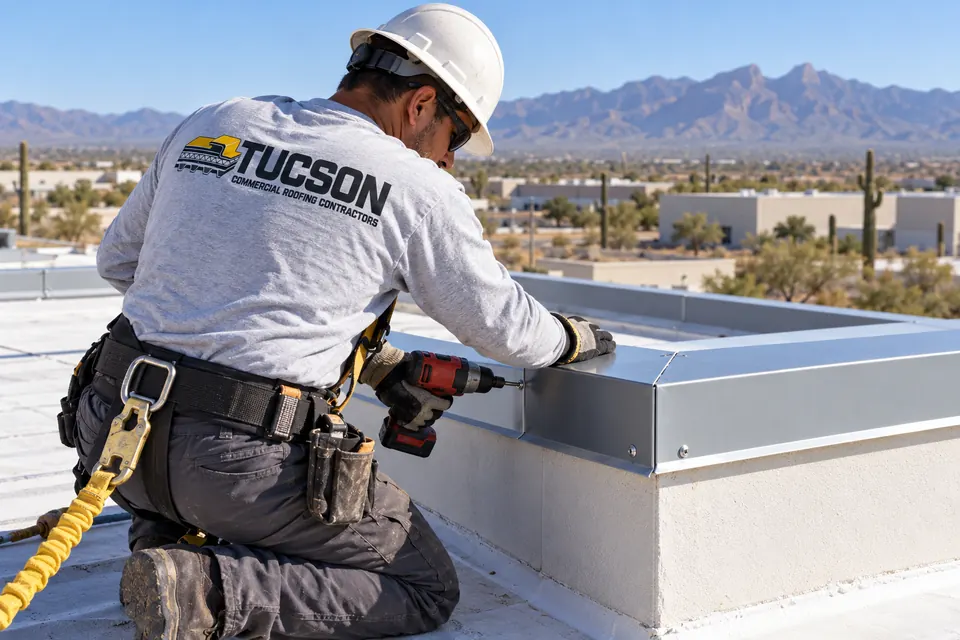
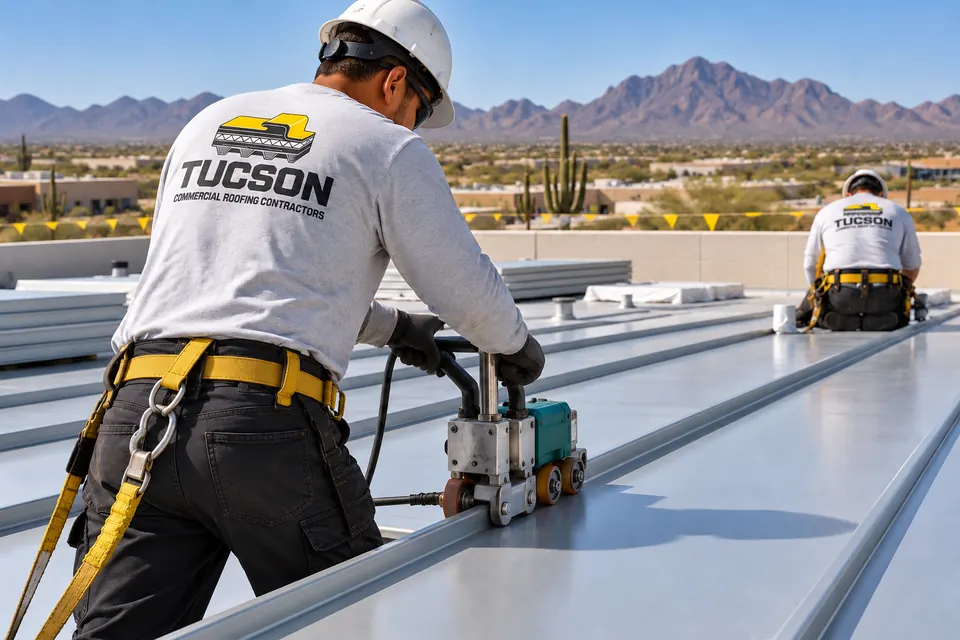
Standing seam panels, fastener replacement, and new trim for barns, equipment sheds, and shops that sit open to wind on every side.

Catalina sits north of Oro Valley on Oracle Road (SR 77). We work there as a Catalina commercial roofing contractor, installing, replacing, and repairing metal and EPDM roofs on small commercial and agricultural buildings.
Catalina properties sit a long drive from the city, so we plan roof visits around two windows: late spring before the storms and fall after them.

A barn or shop on open ground takes the full force of monsoon gusts. Wind gets under a loose drip edge or rake trim, pries it up, and the next storm pushes rain under the first row of panels or the membrane edge.
Late spring visits catch dried sealant, loose screws, and clogged gutters before June 15. A fall visit after September 30 finds what the storms opened, so repairs happen while the weather is mild and the roof is dry.
Here is what we find on Catalina roofs, ranked by how soon each one needs work.
Corners and rake trim bent up by a storm gust leave the roof edge open. The next strong wind can peel the panel or membrane back from that point, so a lifted corner needs repair right away.
Summer heat expands and shrinks the panels every day until screws along the ribs work loose. Each loose screw leaves a hole that drips onto tools, feed, or stock stored below the roof.
Older EPDM on low-slope additions shrinks and pulls at its laps and perimeter. A lap that has opened even a finger width lets water travel under the membrane into the insulation.
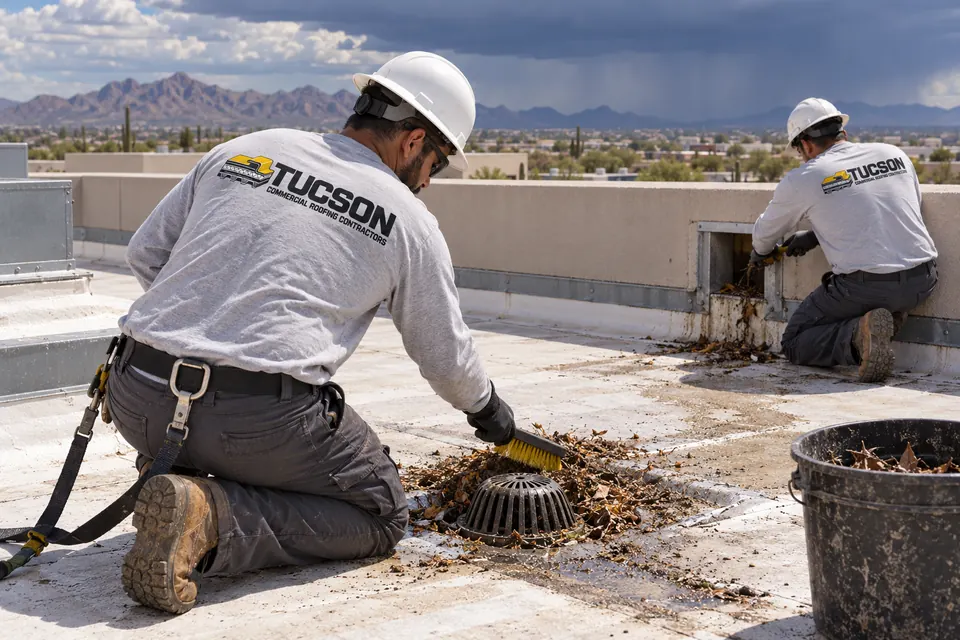
Dust, leaves, and nesting material collect in gutters on rural buildings between visits. A blocked gutter overflows in the first monsoon downpour and sends water back under the eave.
Paint on older metal panels turns chalky in strong sun. Chalking alone still sheds rain, but bare spots at laps and cut edges start to rust and need a look each spring.
Monsoon hail leaves small bruises and punctures in EPDM that are hard to spot from the ground. A fall roof walk finds them before the next rain soaks the insulation underneath.
Each row pairs a failure we see on Catalina roofs with what a new roof changes.
Original edge metal on many farm and shop buildings was set with widely spaced fasteners, and storm gusts lift it a little more every summer.
A new roof gets edge metal and rake trim fastened on a close pattern, with corners locked down where wind pressure on the roof runs highest.
Exposed-fastener panels carry hundreds of screws, and each washer dries out in the sun until the whole roof needs another round of fastener work.
Standing seam panels attach with concealed clips under the seam, so a distant building has far fewer exposed holes to check on every visit.
Patched EPDM on a low-slope office or tack room addition carries a long history of taped repairs, and each patch edge is another place for a leak.
A new EPDM membrane goes down in wide sheets with fewer laps, and new flashing at every vent and curb closes the old leak points.
Roofs at the end of their life need a long list of repairs at each spring and fall visit, and travel time adds to every trip out.
With good installation and upkeep, EPDM runs roughly 20 to 30 years and metal 40 or more, so seasonal visits shrink to short checks of edges and drains.
Most Catalina buildings we inspect carry metal panels, EPDM, or a mix of the two.

Standing seam panels, fastener replacement, and new trim for barns, equipment sheds, and shops that sit open to wind on every side.

Black or white EPDM in wide sheets for low-slope additions and small commercial roofs, with new pipe boots and flashing at each vent.

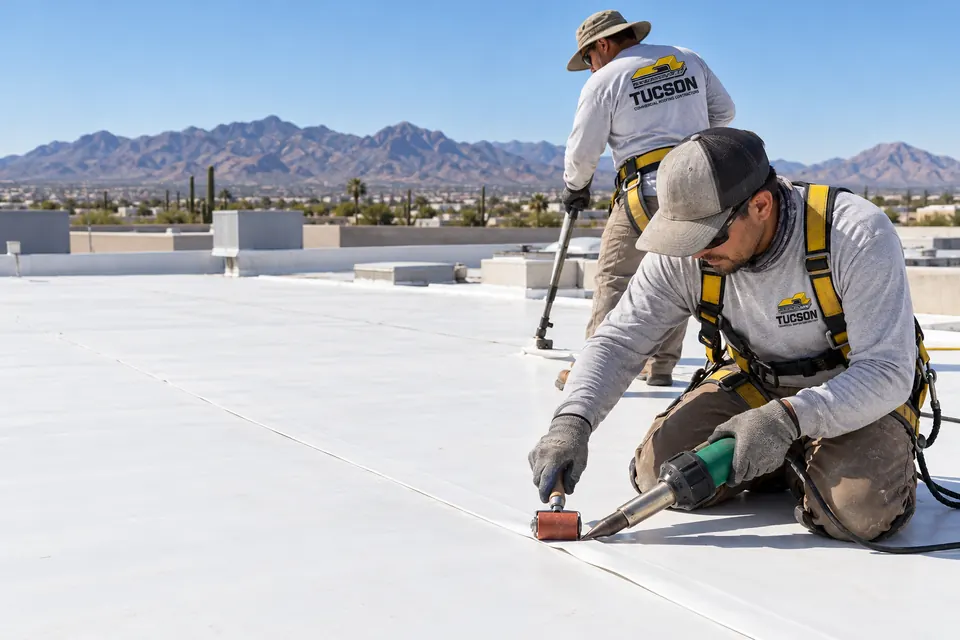
Heat-welded white TPO for small commercial roofs carrying rooftop HVAC units, with new curb flashing so seams hold through storm season.
Call and tell us which edge lifted, how to reach the building from Oracle Road, and what is stored under the roof. Photos of the corner help.
These steps follow the spring and fall rhythm we use for Catalina properties.
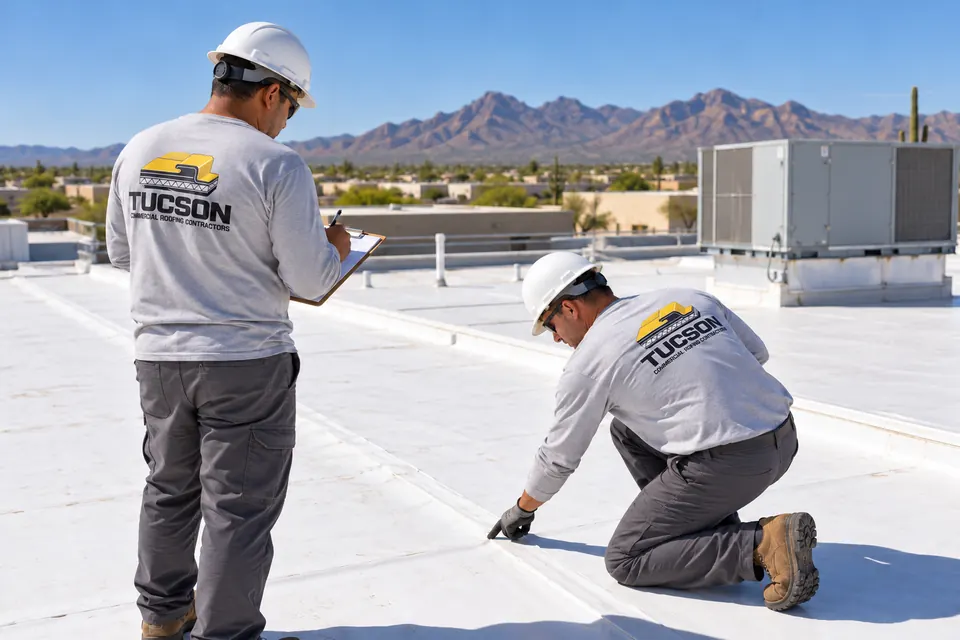
Late spring is when we walk the roof edge to edge, photograph trim, panel laps, gutters, and EPDM flashing, and note each loose screw or open seam on a roof plan.
Gate codes, a turnaround for the material truck, and a staging spot near the building get set ahead of time, so the long drive out becomes a full day on the roof.
Loose screws and a few open laps call for a repair. Rust through the panels, or EPDM shrinking across the whole field, points to replacing that roof.
Catalina is unincorporated, so a roof replacement there goes through Pima County Development Services, and county inspections of the roof work close out the permit.
During monsoon months, each workday ends with the roof sealed before afternoon storms build, and loose panels, rolls, and scrap tied down against gusts at the edge.
After September 30, a fall roof walk checks edges, fasteners, laps, and gutters for storm damage and sets the repair list for the next spring visit.


Catalina sits farthest north on Oracle Road, and these areas lie to its south.
Low-odor roof work on occupied medical buildings.
Office roofs replaced ahead of rooftop solar arrays.
Retail center roofs done one tenant at a time.
Metal hangars and warehouse roofs along I-10.
Two roof walks a year cover most of it: one in late spring before monsoon season starts June 15, and one in fall after it ends September 30. Each visit clears gutters and drains, checks edge metal and trim, replaces loose screws, and reseals open laps and flashing at vents and curbs.
Each visit finds different problems. Spring shows what months of sun did to sealant, washers, and EPDM laps, so repairs go in before the storms. Fall shows what monsoon wind, hail, and heavy rain opened up, so the roof heads into winter closed.
One planned day on the property handles most of it. Access details, staging, and the repair list are confirmed ahead of time from your photos and the last roof report, so materials for edge, screw, and lap repairs arrive with the first visit.
Wind pressure is highest at the corners and edges of a roof, and a building on open ground catches full gusts. Once a drip edge or rake trim lifts, wind gets under the panel or membrane and keeps peeling it back from there.
Repair works when the panels are solid and the leaks trace to screws, washers, or a few open laps. Rust through panel laps and cut edges across most of the roof, or framing that has shifted, points to new panels.
Yes. EPDM goes on low-slope additions, small offices, and flat sections of shop buildings, laid in wide sheets with new flashing and pipe boots at each vent. A moisture check comes first so any wet insulation gets replaced before the new membrane goes down.
Catalina roofs fall under Pima County Development Services, since the community is unincorporated. A commercial roof replacement generally requires a permit and inspections, and we file the application and arrange each county inspection for the job.
No. Catalina is a separate unincorporated community farther north on Oracle Road (SR 77), past Oro Valley, while Catalina Foothills lies below the Santa Catalina Mountains closer to the city. Both use Pima County permits, but Catalina roofs face more open-ground wind and a longer drive for each visit.
Call or request an estimate, and we will arrange an inspection of your Catalina roof timed to the season.
Leave a name and number, and we will call you back about the roof.