TPO Roofing
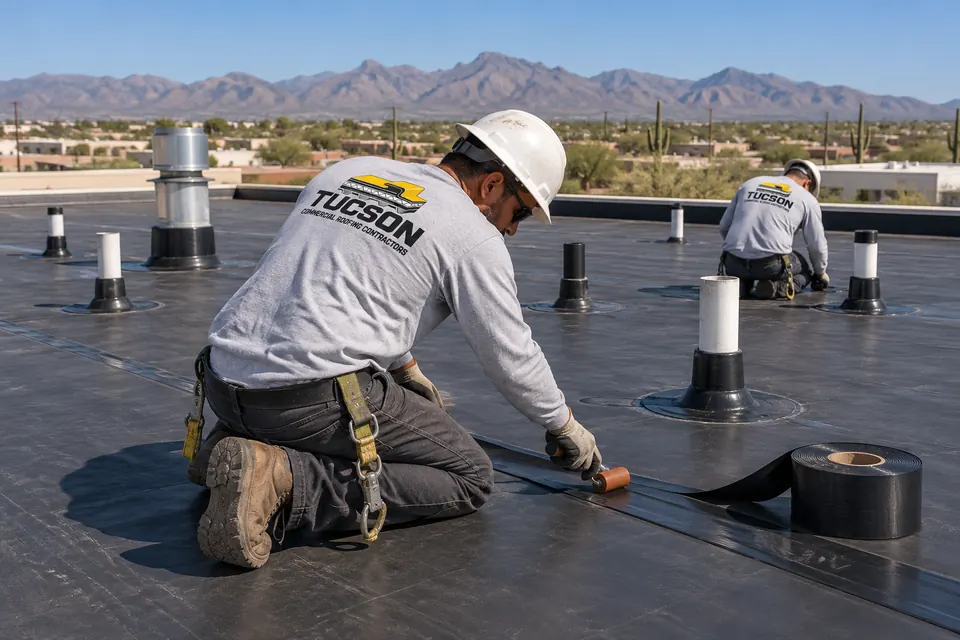
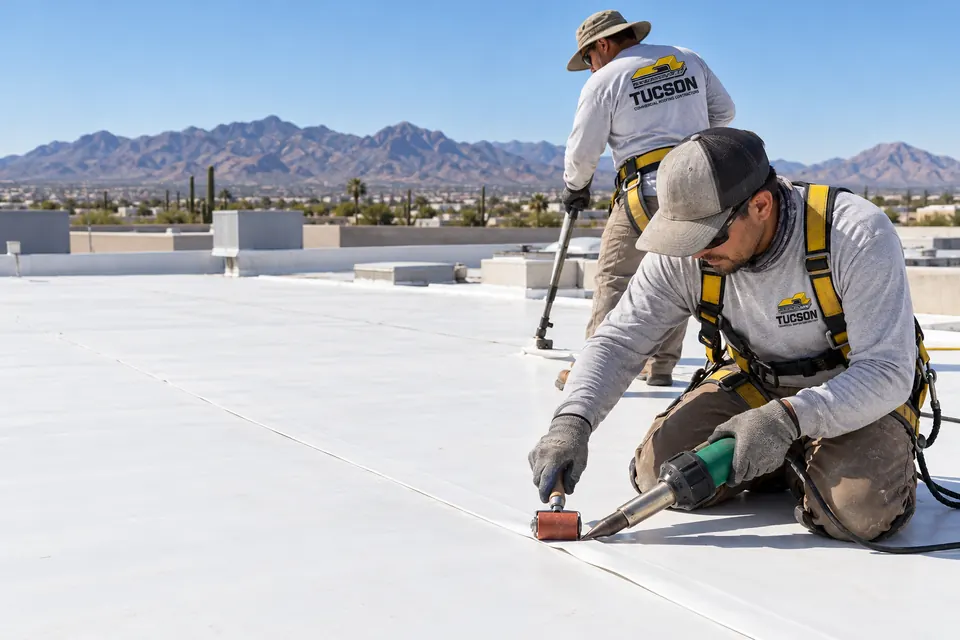
Heat-welded white TPO laid before the array, with factory flashing boots at each rack attachment and conduit penetration.

As a Catalina Foothills commercial roofing contractor, we replace and repair office building roofs so they are ready to carry a rooftop solar array for the decades it stays in place.
Office buildings below the Santa Catalina Mountains get strong sun most of the year, which makes their flat roofs a natural place for solar panels.

A solar array stays on the roof for 25 years or more. If the membrane under it has ten years left, the panels have to come off midway through their life so the roof can be replaced, and that removal adds cost to the roof job.
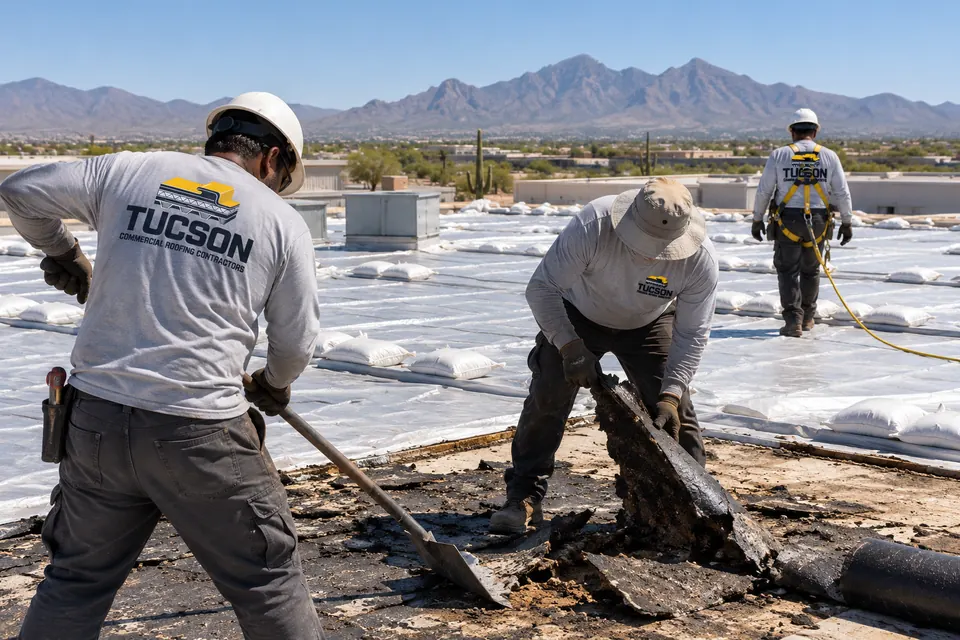
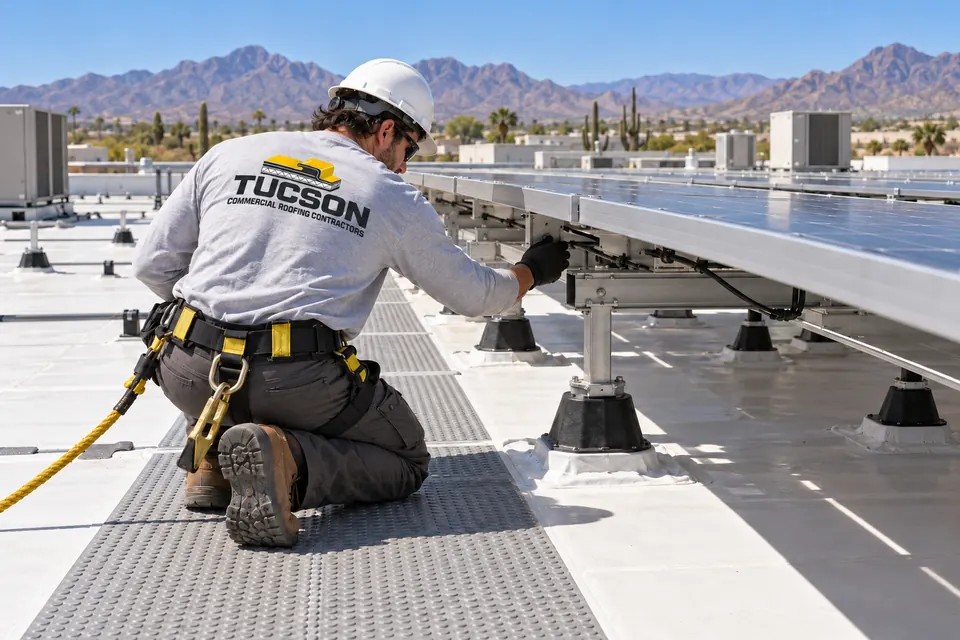
We check the age and condition of the membrane before panels go up. When replacement makes sense, the new roof goes down first so roof and array age together, with mounts and conduit flashed into the new membrane.
These signs show up on office roofs with solar or on roofs about to get it, sorted by urgency.
Attachment points sealed only with caulk open as the rack expands in summer heat. Water follows the mount bolt through the membrane and into the deck.
Service techs crossing the same strip of membrane to reach inverters scuff the surface thin. Bare scrim showing through the membrane means that path needs walk pads.
Ballast blocks and rack feet set across the drainage path hold water against the roof after storms, and the membrane under them softens.
Panels installed over a roof near the end of its life lock in a costly removal and reinstall when that membrane wears out.
Conduit that drops through the roof to the electrical room needs a sealed penetration. A drip near that wall during a storm points to an open seal right now.
Hail that slips between rows can bruise the membrane in spots hidden from the ground. Damage under an array is easy to miss without a roof walk.
Each benefit starts with a problem that solar owners in the Foothills run into on an older roof.
Panels mounted over a fifteen-year-old membrane must come off and go back on when that membrane reaches the end of its service life.
Replacing the roof first gives a membrane rated for roughly 20 to 30 years under an array built for 25 years or more.
Caulked rack attachments on older roofs dry out and crack in the sun, and each one becomes its own leak point.
On a new roof, each attachment gets a flashed boot welded or adhered into the membrane, so mounts shed water like the rest of the field.
Foot traffic from array maintenance grinds grit into the membrane along the same lines every visit.
Reinforced walkways laid during the new roof give technicians a marked path to inverters and units without wearing the field membrane.
Dark roofs between array rows soak up heat that rises under the panels and around the rooftop units serving the offices.
A white TPO membrane reflects sun in the open spaces between rows, and a CRRC-rated product keeps any cool-roof incentive available.
These three services cover the office roofs we prepare for solar in the Catalina Foothills.

Heat-welded white TPO laid before the array, with factory flashing boots at each rack attachment and conduit penetration.

Fully adhered EPDM with taped seams and pressure-sensitive flashing around mounts, conduit, and pipe penetrations under the array.

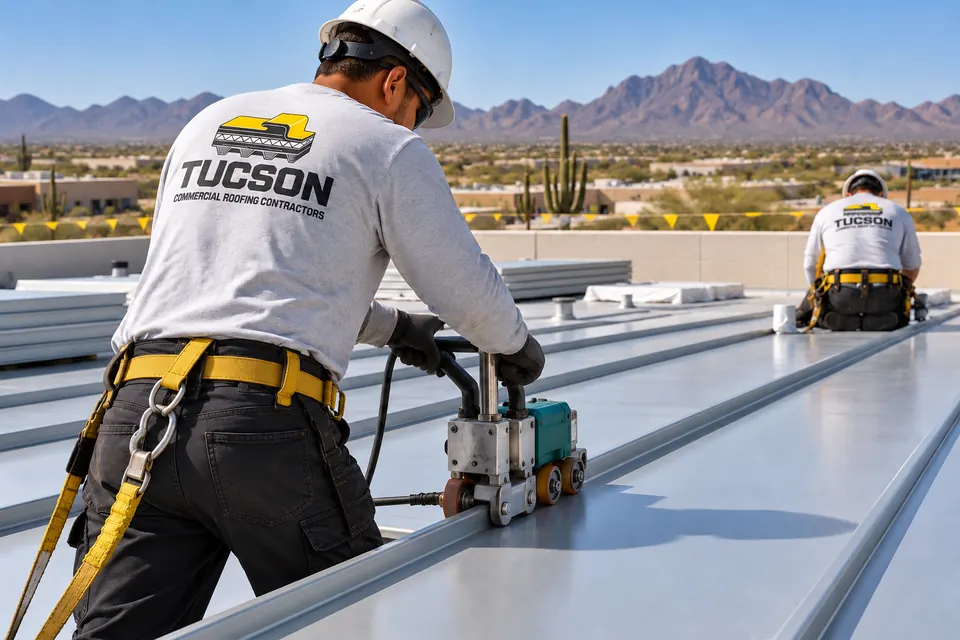
Standing seam panels accept clamp-on solar mounts that grip the seams, so rack attachment leaves the roof panels unpunctured.
Call and tell us the roof age, the membrane type, and when the solar installer plans to start, so the roof inspection happens first.
This sequence puts a new roof down and leaves it ready for the solar installer.
Membrane age, seams, drains, and every existing penetration are recorded. Roofs with an array get a walk along each row to check mounts and hidden hail bruising.
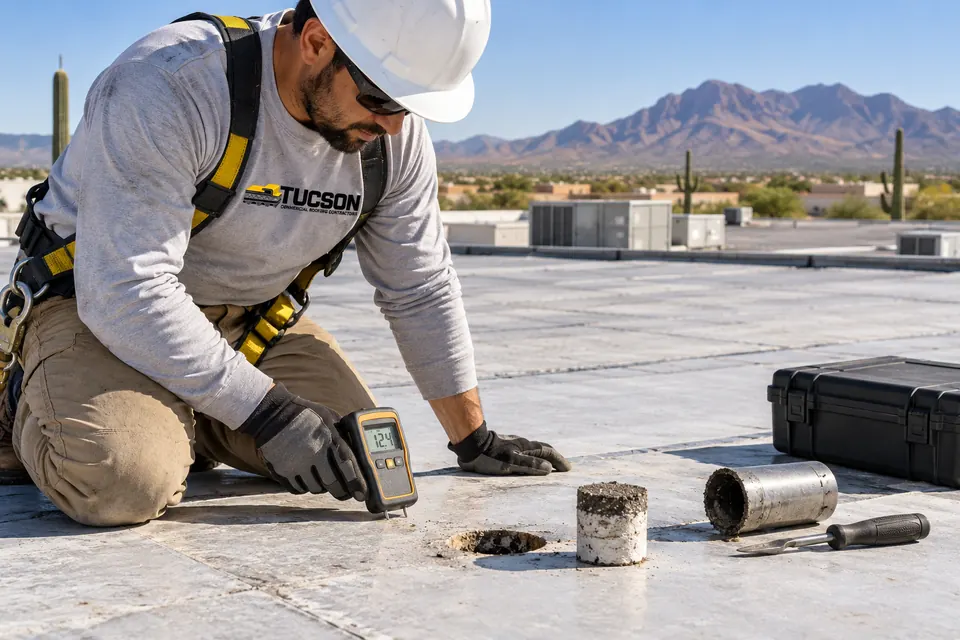
Core cuts and moisture readings tell whether the insulation can stay under a recover or has to come out before the array goes on.
Rack rows, ballast zones, conduit drops, and service paths from the solar plan are marked on the roof plan, so tapered insulation keeps drainage clear of rack feet.
Pima County Development Services handles permits for roof replacement in the unincorporated Foothills, with inspections scheduled before the array goes up.
New membrane goes down section by section. Flashing boots for planned mounts and conduit are set into the membrane, and walk pads go down along service paths.
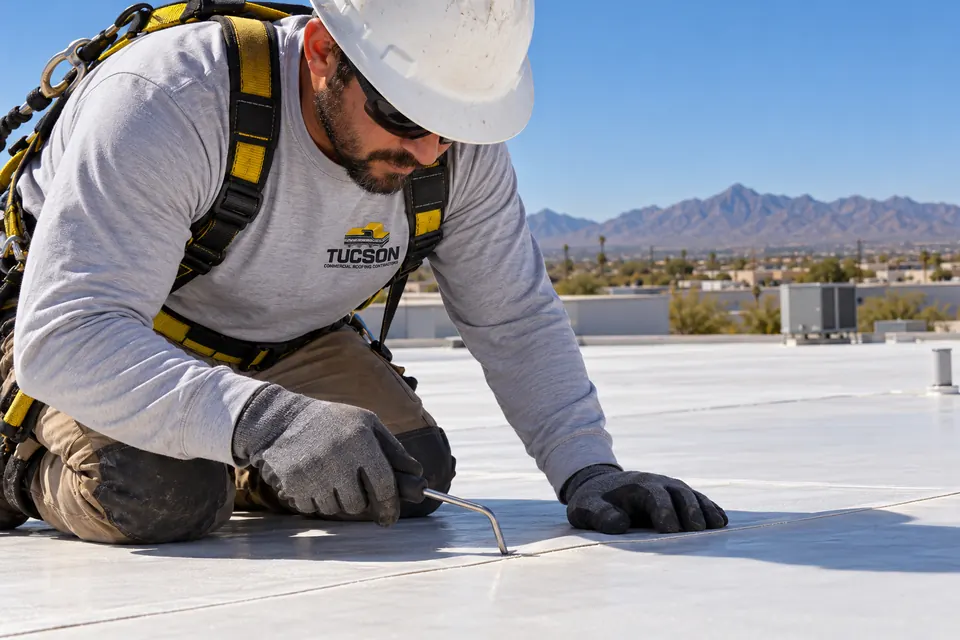
Before the racking crew arrives, we walk the finished roof, probe the seams, and give the owner photos of every mount flashing and walkway.


The Catalina Foothills sit between these communities north of Tucson.
Low-odor roofing over clinics and labs.
Strip center roofs worked around tenant hours.
Drainage fixes for older flat roofs.
School roofs sequenced around summer break.
Replace it first when the membrane has less life left than the array. Solar panels stay on a roof for 25 years or more, so a newer roof lets both age on the same schedule. Waiting means paying to remove and reinstall the panels when the old roof fails.
Each attachment gets a flashing boot made for that membrane, welded to TPO or adhered to EPDM, so water sheds around the mount bolt. Ballasted systems sit on protection pads without punctures, though their conduit still needs a sealed penetration where it drops into the building.
Yes, in most cases. We reach the leak through the service paths between rows, and when a mount or seam sits directly under a panel, we coordinate with the solar contractor to lift that panel. The repair is flashed and probed before the panel goes back down.
White TPO fits most Foothills office roofs headed for solar, because its welded seams and factory boots handle mount flashing well and it reflects heat between rows. EPDM works on roofs crowded with pipes. Both last roughly 20 to 30 years with good installation and maintenance.
They do. Technicians cross the same path to inverters and rooftop units every visit, and grit under their boots wears the membrane thin. Reinforced walkways laid along those paths take that wear, and they mark a clear path so foot traffic stays off the field membrane.
Pima County Development Services issues permits for the unincorporated Catalina Foothills. Commercial roof replacements generally require a permit and inspections, and we schedule those inspections so the roof passes before the solar racking goes on.
Schedule the roof first and the solar installation right after it. Late spring works well, since the roof is closed before monsoon season starts June 15. Fall is the next window after the season ends September 30, ahead of the installer arriving.
Tell us about the office building, the roof age, and the solar plan, and we will set up a roof inspection before installation.
Leave a name and number, and we will call you back about the roof.